

· News
A day in Early Childhood with the "Young Explorers"
The move to Kindergarten is, for the youngest members of the Marymount community, a truly distinctive stage, always experienced with curiosity and joy, but certainly never without a touch of apprehension, “since it is not simply a change of spaces or routines, but a deeper evolution involving emotional, relational and cognitive aspects,” as the Early Childhood teachers explain to us.
In our context, moreover, this moment takes on an even greater significance: the bilingual nature of the school makes it particularly challenging, since the little ones are called upon not only to find their way among new environments and dynamics, but also to strengthen their communication skills between two very different cultural codes. Precisely in order to make the change more understandable and, over time, more familiar, our pedagogical team has over the years stepped up the opportunities for getting to know, exploring and comparing, structuring them into a continuity path that runs from February through late May.
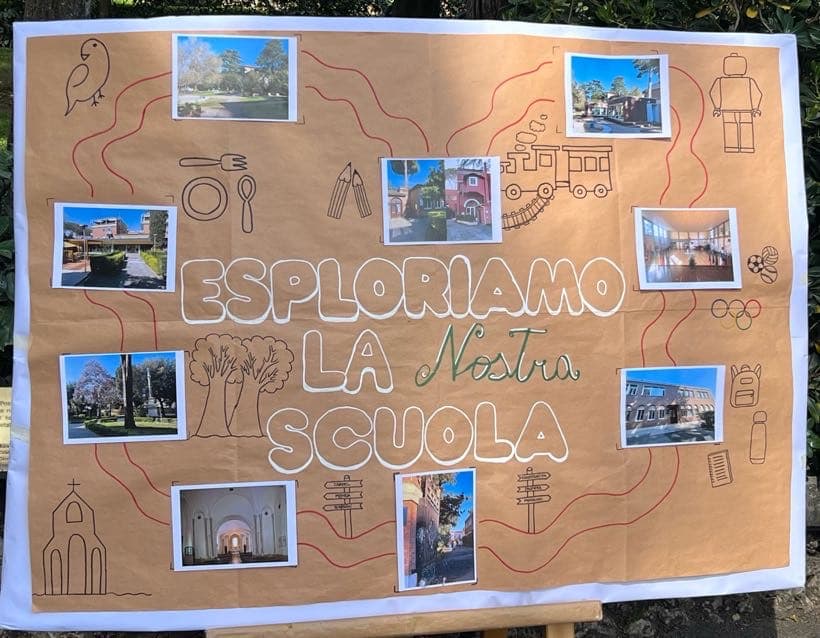
As part of one of these meetings we followed closely the day of the “Little Explorers,” which began with the shared reading of a picture book that involved the children in an active and participatory way, We’re Going on a Bear Hunt: the sounds, the gestures, the expressions, every element helped turn the narration into an immersive experience, capable of stimulating imagination and curiosity. From that moment, the step toward adventure came naturally: divided into small groups and encouraged by the presence of the teachers and the 5-year-old children, our “little explorers” in fact turned into little monkeys, little birds, crocodiles, snakes, hedgehogs, squirrels, bears, frogs and elephants to set out on a journey to discover the Kindergarten spaces that will welcome them next year. The exploration of the classrooms, the pavilions, the outdoor learning spaces, organized in a playful and cooperative form, thus allowed the children to get their bearings, recognize places and build their first points of reference, fostering a gradual familiarization that will help them reduce the uncertainty linked to change. The follow-up activities that came next, such as the shared construction of a map of the explored spaces, also took on a significant role, since they allowed the children to give shape to the experience they had lived and to consolidate what they had learned, while at the same time strengthening their sense of independence.
In this path it was then natural to give a more central role to parents as well, invited to take part directly in the next meeting, to be held on April 20: a concrete opportunity to make the dialogue between school and family ever more solid and fruitful and to accompany the children through such a delicate phase of their growth.