· Primary School
One, Two, Three… Arché! Children Take Center Stage in Critical Thinking
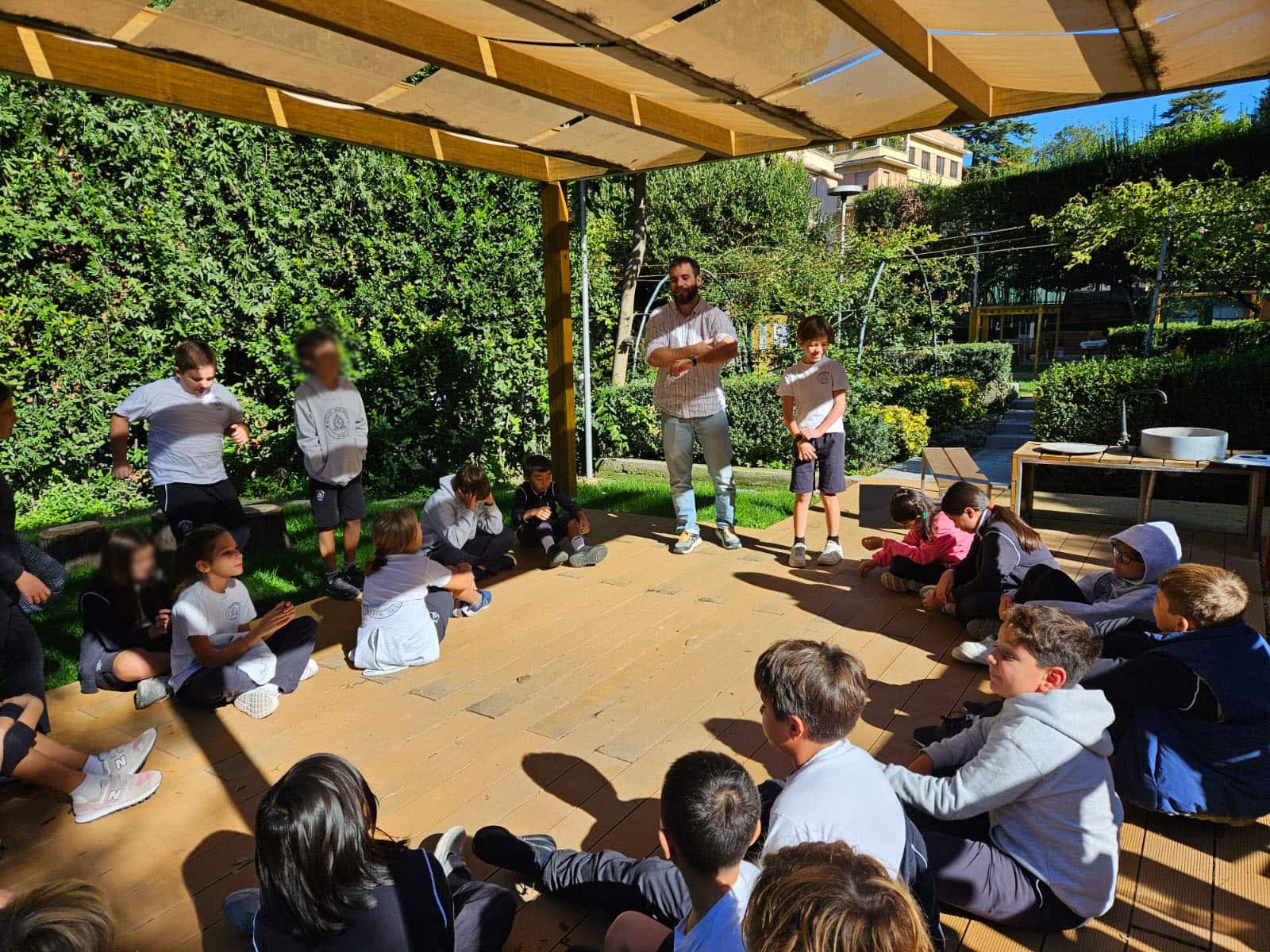
“Why do we live if we then have to die?” “Why did God choose Earth to bring forth life after the Big Bang?” “Why do we feel forced to always do what everyone else does?” The questions that emerged during the first meetings of the multidisciplinary program just launched in the Grade 4 and Grade 5 classes of the Primary School leave no doubt: children love to think philosophically and are ready to do so much sooner than is usually believed.
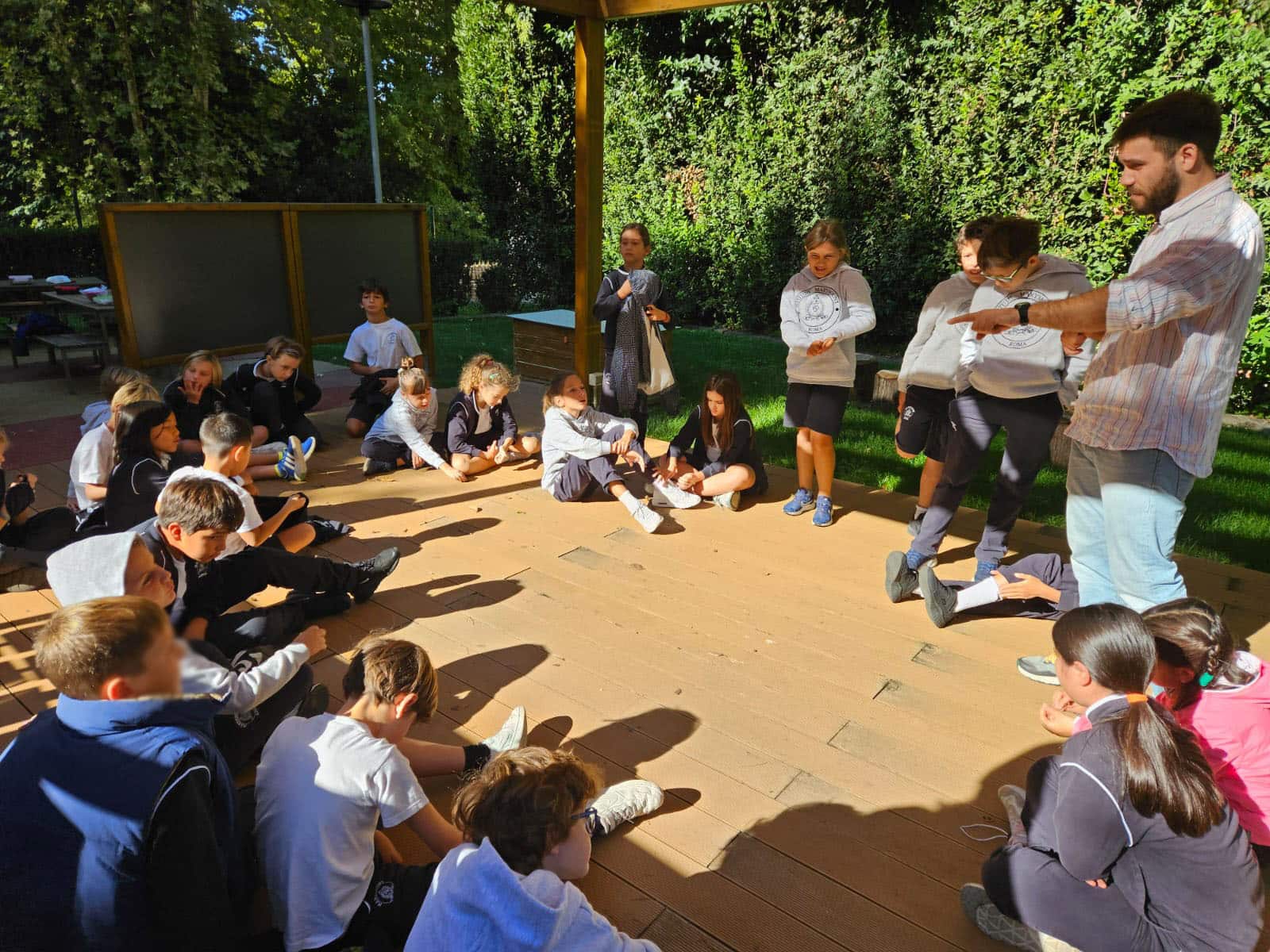
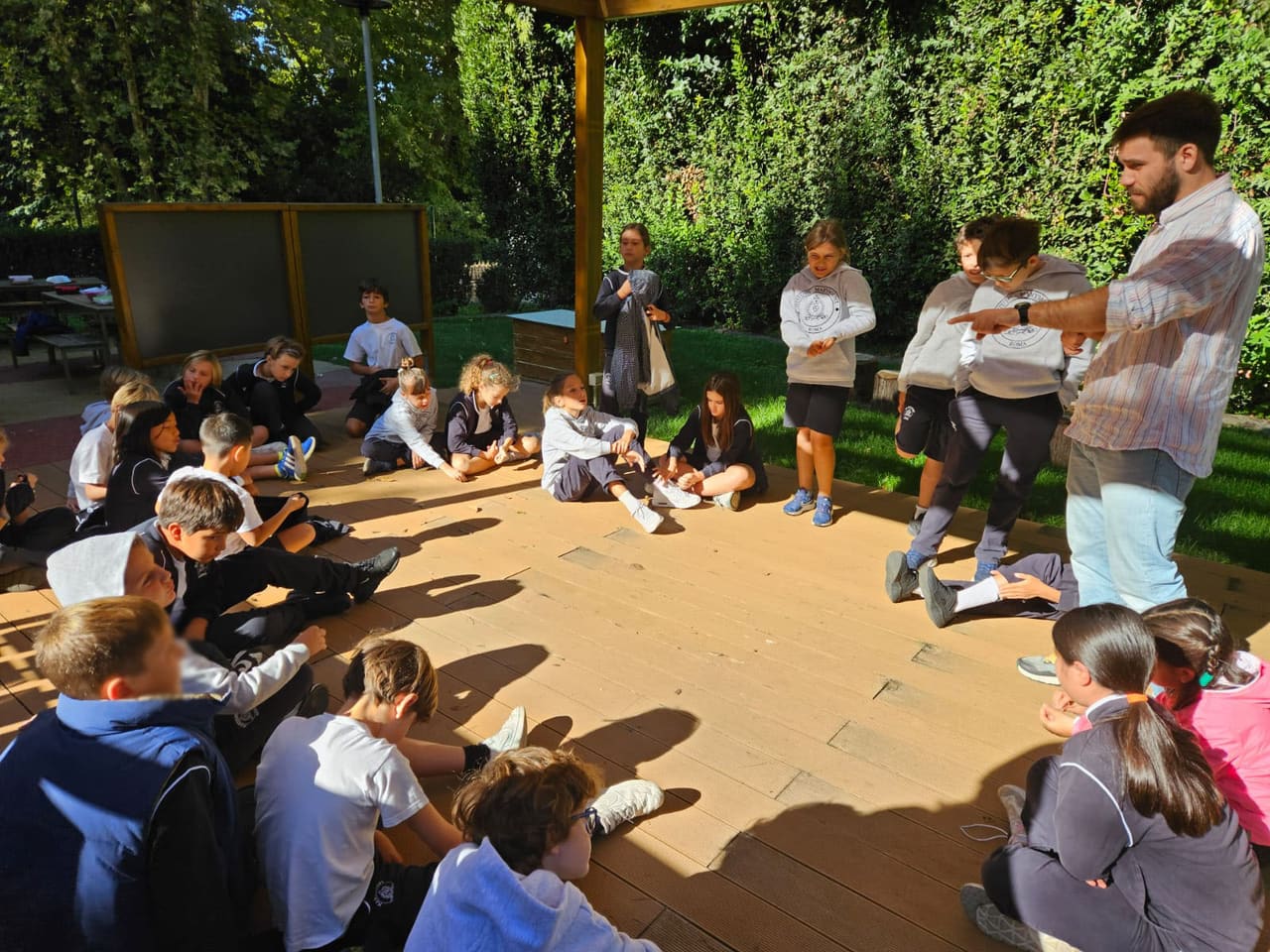
The children involved in the philosophy, reading aloud, anthropology, and outdoor learning workshops, which take place on Monday mornings as part of the enrichment hours, have already shown a surprising capacity for reflection and abstraction. Searching for water, the project’s first “unifying” element, among the stones and leaves of their garden, the young “apprentices” of Grades 4 and 5 productively seized the opportunity to formulate hypotheses, questions, and theories and to engage with topics and significant figures such as Thales, diversity, and conformism.
This multidisciplinary and cross-curricular program, led by teachers who teach from the Early Childhood School to the High School, aims to foster in these young learners not only cultural and cognitive skills but also the social, reflective, and communication abilities so fundamental to the harmonious development of personality, in which words play a central role as a tool for conceptualizing and sharing one’s view of the world and one’s inner life.
A priority that arose from our teachers’ daily observation: as the teachers Cristina Leo and Lidia Tavani tell us, it is increasingly evident in the way children and teenagers express themselves that language is bent to exclusively practical ends and is therefore extremely hasty, poor, and generic. “Teacher, can I paper?” is the example that Ms. Cristina brought to our attention, and she does not want to make it a matter of a mere broken linguistic rule, but rather to lead us to reflect on the delicate relationship between language and thought. “Having few words in your vocabulary is like having few arrows for your bow,” the teacher continues with an effective metaphor that links linguistic scarcity and imprecision to the ability to make an impact on reality and that also interferes with our relationship with ourselves, a concept especially close to the heart of Ms. Lidia: “Language is the tool that allows us to draw closer to others and, first of all, to ourselves, in an emotional attunement that is however hard to reach if even in what should be the years of slow and gradual formation the main concern is always and only the curriculum, almost in a product-result-profit mindset.”
In this weekly hour, therefore, the challenge for the children will not only be to learn facts about Pythagoras, Plato, and the ways their discoveries have shaped the history of thought and civilization, but to explore the world with a different, more critical gaze, which becomes the tool for overcoming the fragmentation, however necessary, of the subjects. A reunification of knowledge that our school intends to pursue with courage in the spirit of an increasingly holistic vision of learning, centered on the integral development of students and on their path of cultural and human growth.