· High School
HIDDEN TREASURES: DISCOVERING VATICAN GREEK MANUSCRIPT 909
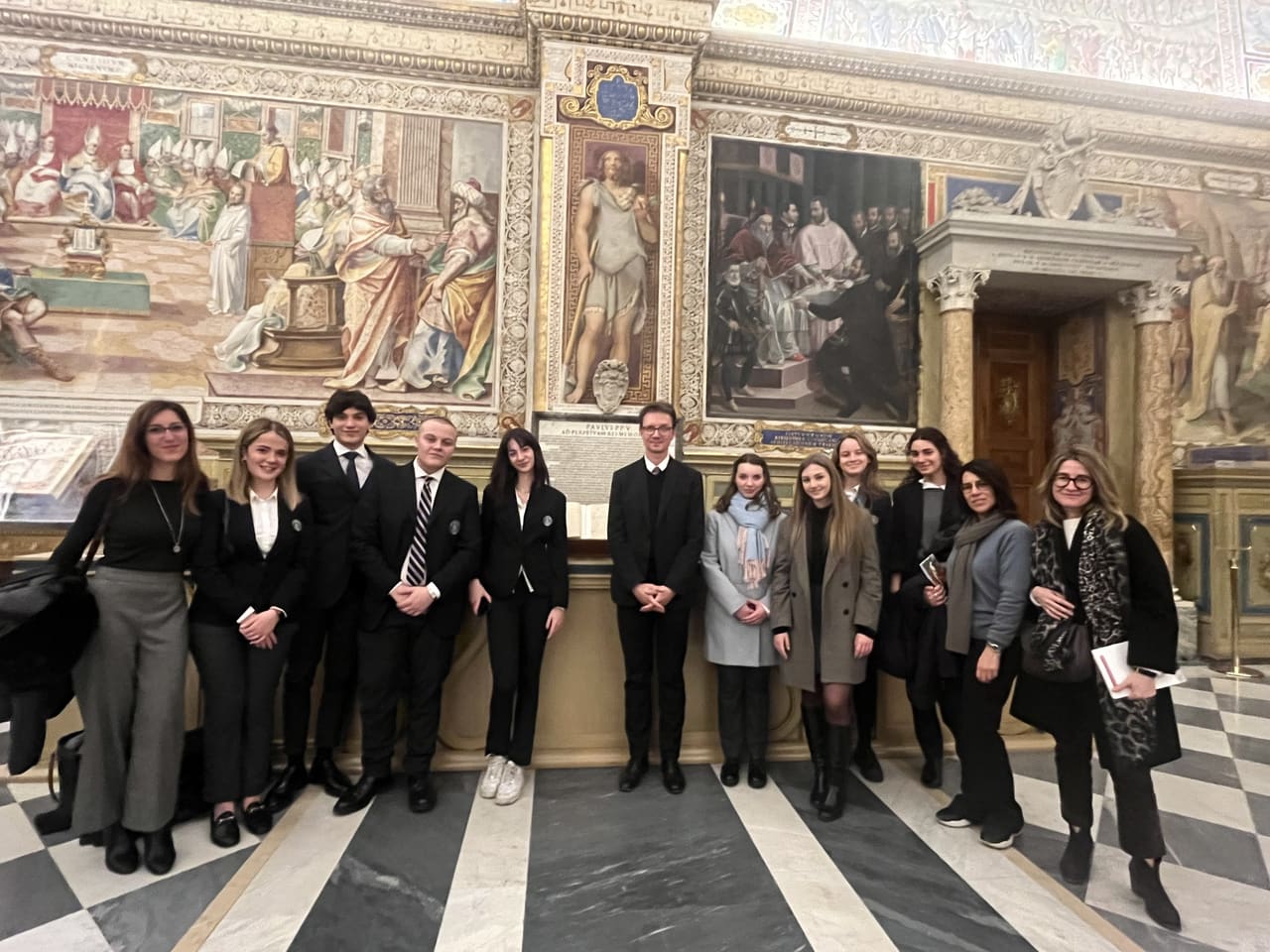
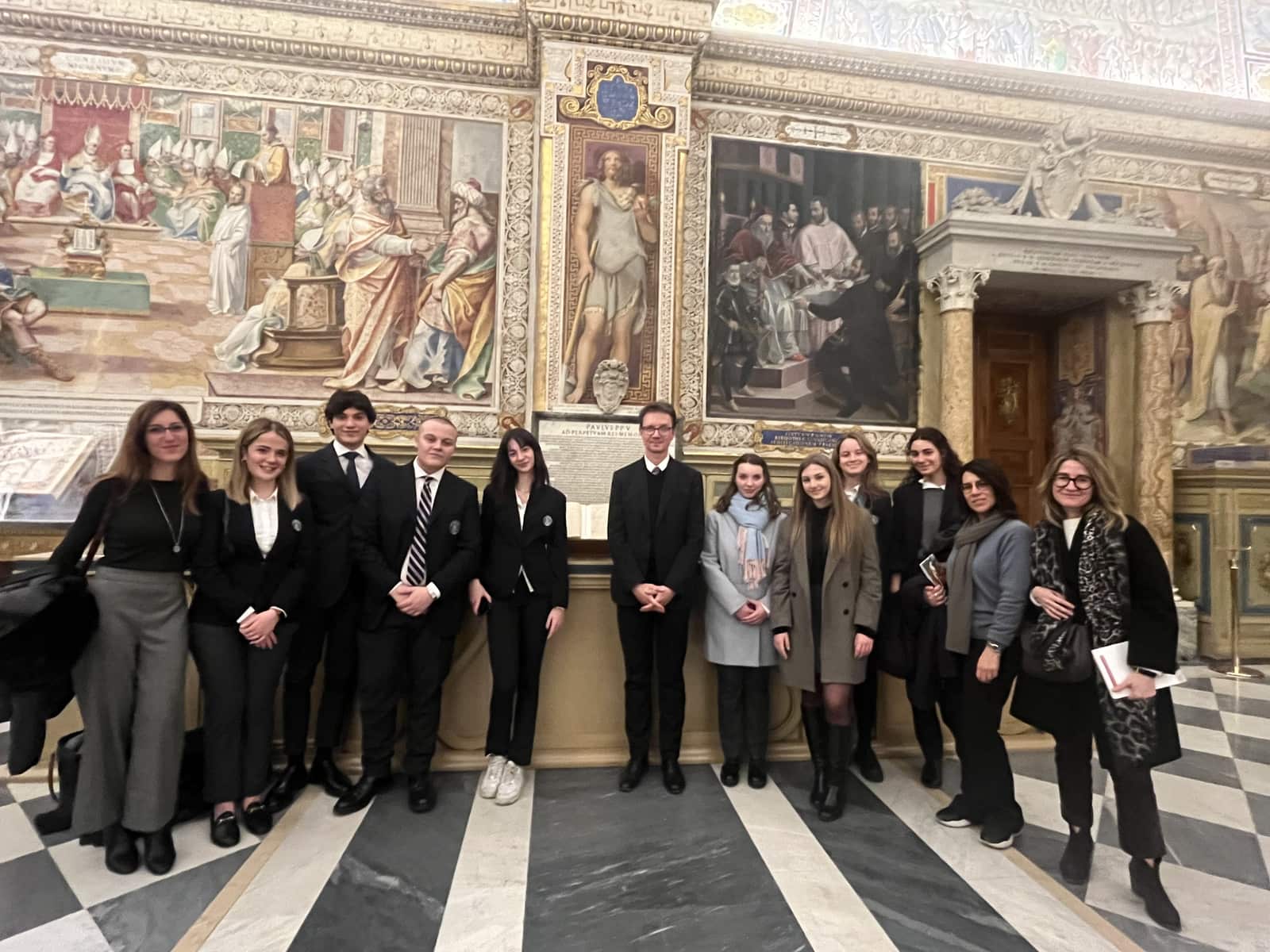
Last January 10, the doors of the monumental Vatican Apostolic Library opened for our fourth- and fifth-year Classical High School students. The request to consult the Vatican Greek 909 codex was granted by Vice Prefect Timothy Janz in person, who, as he welcomed us, also confided: “It is one of the manuscripts I care about most; I felt a fondness at the thought that a school class wanted to consult it.” Here is the vivid account of what our Irene Zu called a “philological journey” into the heart of Rome and the immense heritage it safeguards.
Amid the arches and age-old columns of Vatican City lies a treasure of inestimable value: the Vatican Apostolic Library. For several centuries a point of reference for scholars around the world, it recently allowed a small delegation of students and teachers from our school to immerse themselves in a veritable philological journey to discover an authoritative medieval codex of Euripides’ “Medea,” a subject of study for both the fourth-year and the fifth-year class.
This tragedy has always stood as a pillar of ancient drama: in the depths of Medea’s soul a storm of emotions is revealed, an interweaving of love and rage that has defied human understanding for centuries. And we too felt called to a challenge by the Vatican Greek 909 codex itself: being able to carry out the philological comparisons our teachers had prepared us for in class in the weeks before the visit helped us better understand what a rugged, mysterious and miraculous path Euripides’ words have traveled to reach us, from that distant year of 431 BC.
Guide and mentor of our adventure was Vice Prefect Timothy James Janz, whose precise information and captivating curiosities about the codex helped make this visit unique.
Through corridors full of books and beneath the magnificently frescoed vaults of the Sistine Hall, our Virgil told us the history of the Library, accompanying us as we read the verses and treating us to a few tasty anecdotes about the methods used to preserve texts and the way the copyists worked, not all of them always so sharp and meticulous in completing their task (how providential these errors later turned out to be is something our teachers often repeat to us in class, but hearing it from a real philologist was certainly something else entirely).
One of the elements that made this visit even more extraordinary was the awareness of how exceptional it was: the prestigious institution, for over five centuries the custodian of hundreds of thousands of manuscripts, printed volumes, coins and works of art, welcomes scholars from all over the world but maintains a very restrictive admissions policy, allowing access only to researchers and university professors who need to consult its collections for their research work.
Even though our course of study daily presents us with the voices of the most distant past, we never thought we could be so amazed in the presence of the ancient. We students and our teachers once again thank the Vatican Library, with the warmest emotion, for welcoming us: now that we have seen with our own eyes the loving dedication with which it carries out its mission of preserving the book heritage, we will perhaps be more convincing and authentic witnesses to the precious role it plays in our society.
Article by Irene Zu, age 17, Fourth Year A, Classical High School (journalism workshop)