· News
UNI-T Project in Brussels: An Experience Worth Sharing
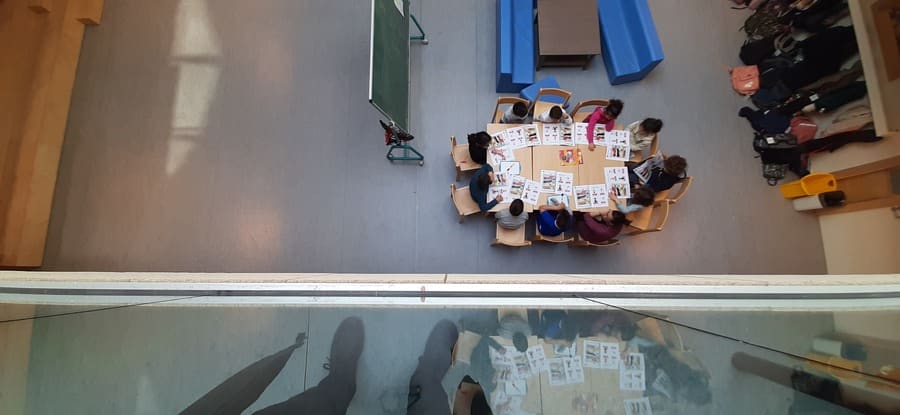
Below we share the account by teacher Ruzbeh Ghofranian – teacher at Istituto Marymount of STEAM, fablab, coding, robotics, and makerspace in the Primary School and Middle School – about a training trip to Brussels, intended for teachers from different countries, as part of the UNI-T project.
Among the organizers of this initiative are Professor Emiliane Rubat Du Mérac for Sapienza University of Rome (with whom our school, as a partner school of Erasmus+, is collaborating on research on well-being and outdoor education) and Elsa Roland for the Free University of Brussels.
The training trip to Brussels on active teaching organized by UNI-T Academy was an exciting experience but, above all, a moment of realization.
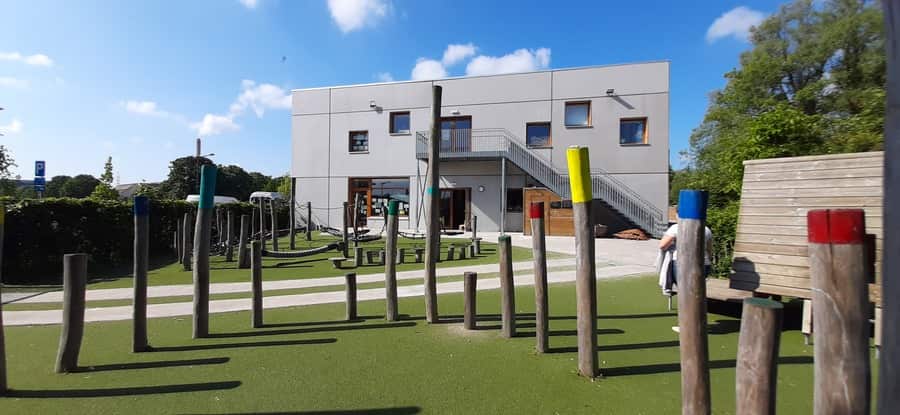
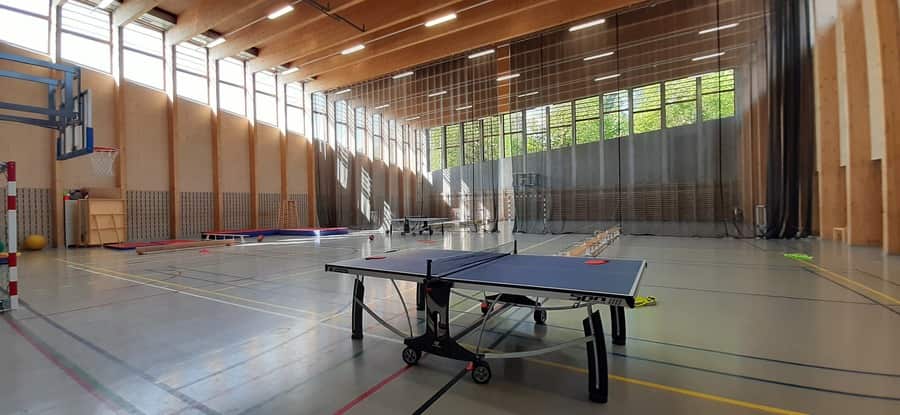
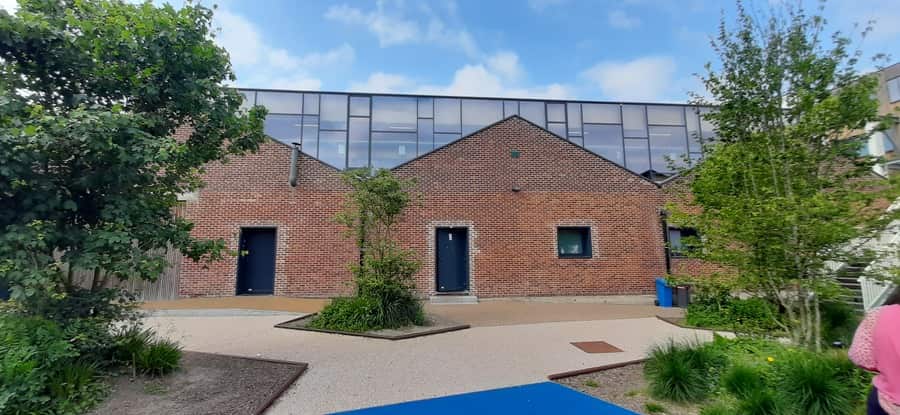
With colleagues from Greece, France, Belgium, and Italy, we were fortunate to be able to visit a few schools, talk with school leaders, compare notes with the teachers, and experience the classrooms firsthand.
The practices used are inspired by the active school and by the principles of Decroly, Freinet, and Morin. Students, in fact, work on macro-concepts from which to derive themes that are always related to one another.
The principle that guides the teaching of the schools visited is that of keeping alive the intrinsic and relational sense of information. This information is therefore contextualized and given “meaning,” laying the foundations for deep understanding.
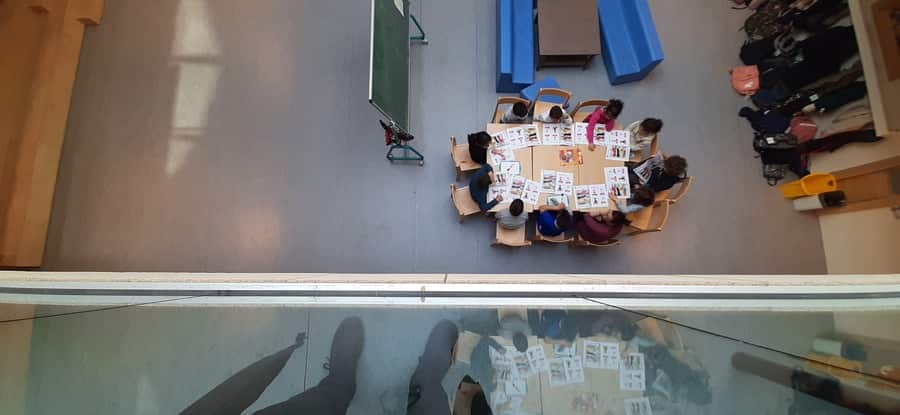
Group work is strongly encouraged and helps develop soft skills so that the active approach to knowledge generates a widespread desire to learn.
Self-assessments are fundamental so that students develop proprioception, coming into contact with their strengths and weaknesses but, above all, with their own desires and aspirations.
The workshop gave me the opportunity to reflect on how much the world of education needs structural change: the teacher as a “dispenser of information” could gain more traction with their students by fostering experiential teaching that is integrative and not simply a generator of correct answers.
In this light, new technologies are certainly a tool for knowledge, but it is necessary to cultivate a human fabric so that there is awareness of one’s own potential, one’s own limits, and the motivations that drive students to “learn to learn.”
The expansion of tech-based educational offerings is not, on its own, an amplifier of awareness if we lose sight of the co-construction of attitudes toward learning and of a deeper knowledge of the self and, therefore, of the most distinctive aspect of us human beings, namely the complexity of our relational world with ourselves and with others.
As for the subjects I teach – through the STEAM approach – the subject Citizenship and Constitution and the FABLAB and Computer Science labs therefore provide a valuable field of application both in terms of active teaching and in constant and fruitful interdisciplinary dialogue.