

· News
Tomorrow's readers in the 'Prato dei limoni'
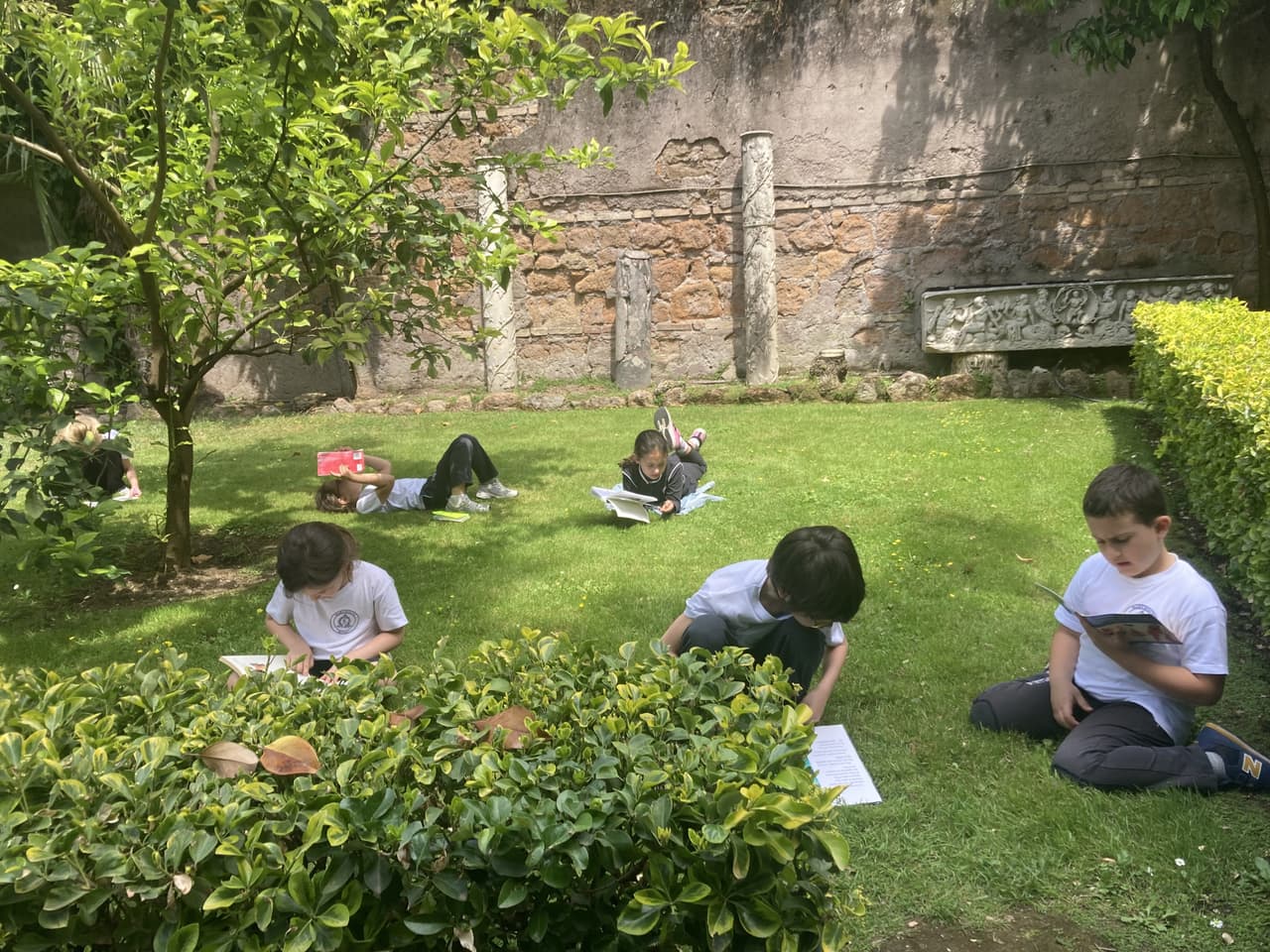
We step into the heart of our school’s teaching activity through the logbook of a Primary School teacher. Cristina, the teacher, accompanies us, in fact, through a special moment: one of her students’ discovery of silent reading. A step that sits alongside and completes the reading aloud that teachers practice daily for and with the children.
“I want to be calm”: it all began with this statement, written by a Grade 1 student in an assignment. I felt I should not waste time, so at recess we went out to the garden, chose a little-frequented corner and named it the “Prato dei limoni” (the “Lemon Meadow”). Within moments, all the other classmates had taken various books from the class library and chosen, with surprising naturalness, to give up play to try engaging with independent reading in this new space.
In a world that runs fast, in which sounds and stimuli overlap relentlessly, offering children a moment of silent reading in a serene environment is a simple but extremely powerful gesture. That is why we teachers of the Primary School pay particular attention to requests like the one I have just described, especially when they come from children who are still grappling with the discovery of letters and sounds. This practice allows them, in fact, to immerse themselves in books without outside pressure: everyone feels free to proceed at their own pace, to dwell on difficult words, to reread, to daydream. It is not only a matter of language learning, but also of respect for individual rhythms, since one feels free to explore the text without judgment or comparison.
The desire expressed by our children does not, however, come out of nowhere: in class, in fact, we teachers practice reading aloud every day, understood as expressive reading done by the adult for and with the children. It is precisely through shared listening that the little ones begin to become familiar with the rhythm of language, tone, pauses, the emotions hidden between the lines. The teacher’s voice guides, engages, creates anticipation and meaning: it is an emotional and linguistic experience that prepares the ground on which independent reading can sprout. They are two sides of the same coin, complementary and irreplaceable: reading aloud nourishes the collective imagination, while silent reading fosters inner dialogue.
Reading in a secluded and serene setting also has an important effect on the emotional level: for many children, especially those facing their first difficulties at school, reading in peace is, in fact, a form of security, a refuge where they can feel capable and protected, and it therefore helps strengthen self-esteem, motivation and self-regulation. That is why fostering the development of a personal and independent relationship with books is not only a teaching choice, but a profound educational act for teaching how to listen, to imagine, to concentrate, to discover the pleasure of being with oneself. And it is precisely in these silent moments that tomorrow’s readers are often born.