· Primary School
Learning from Nature: Meeting Professor Fusaro
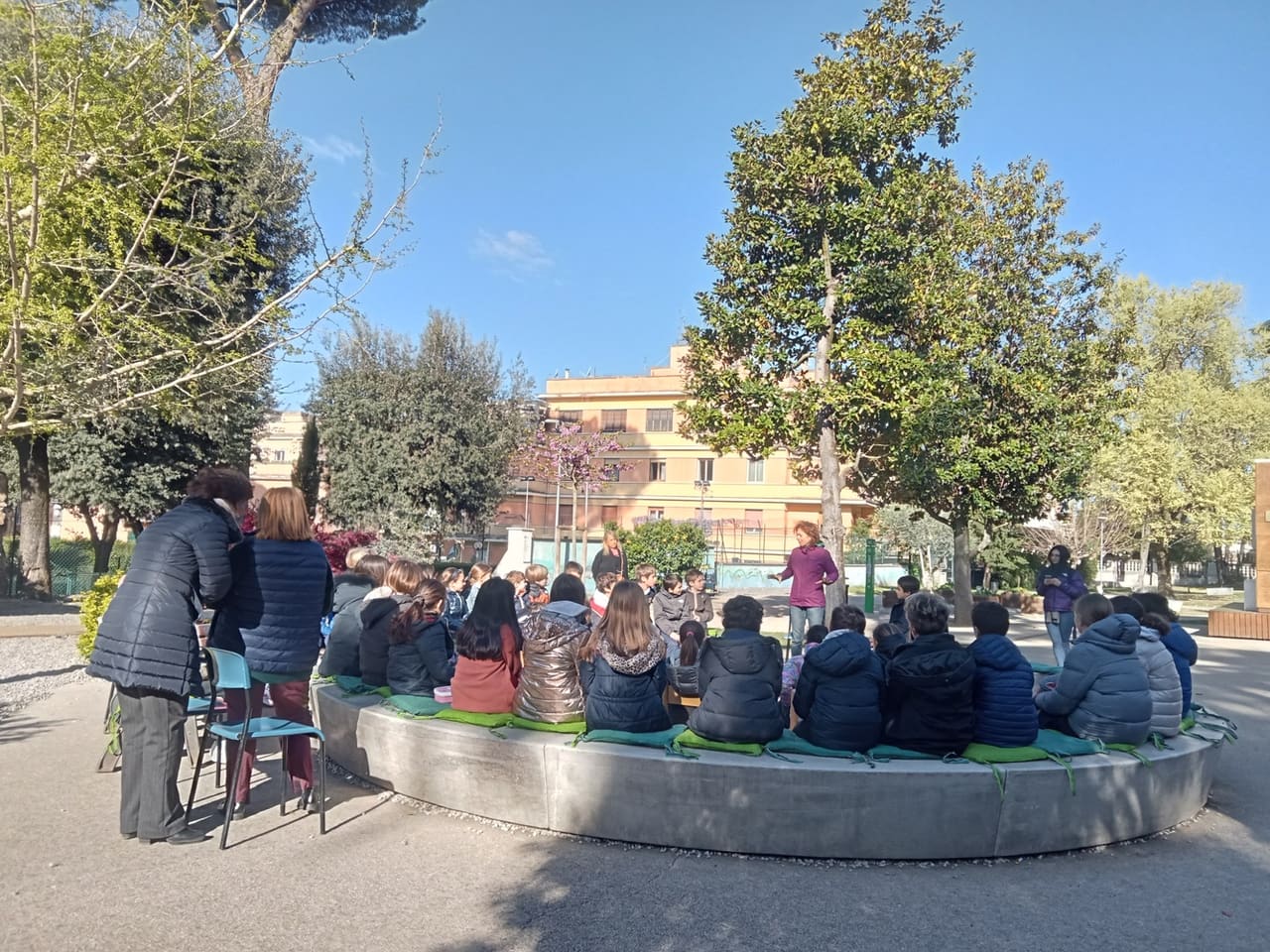
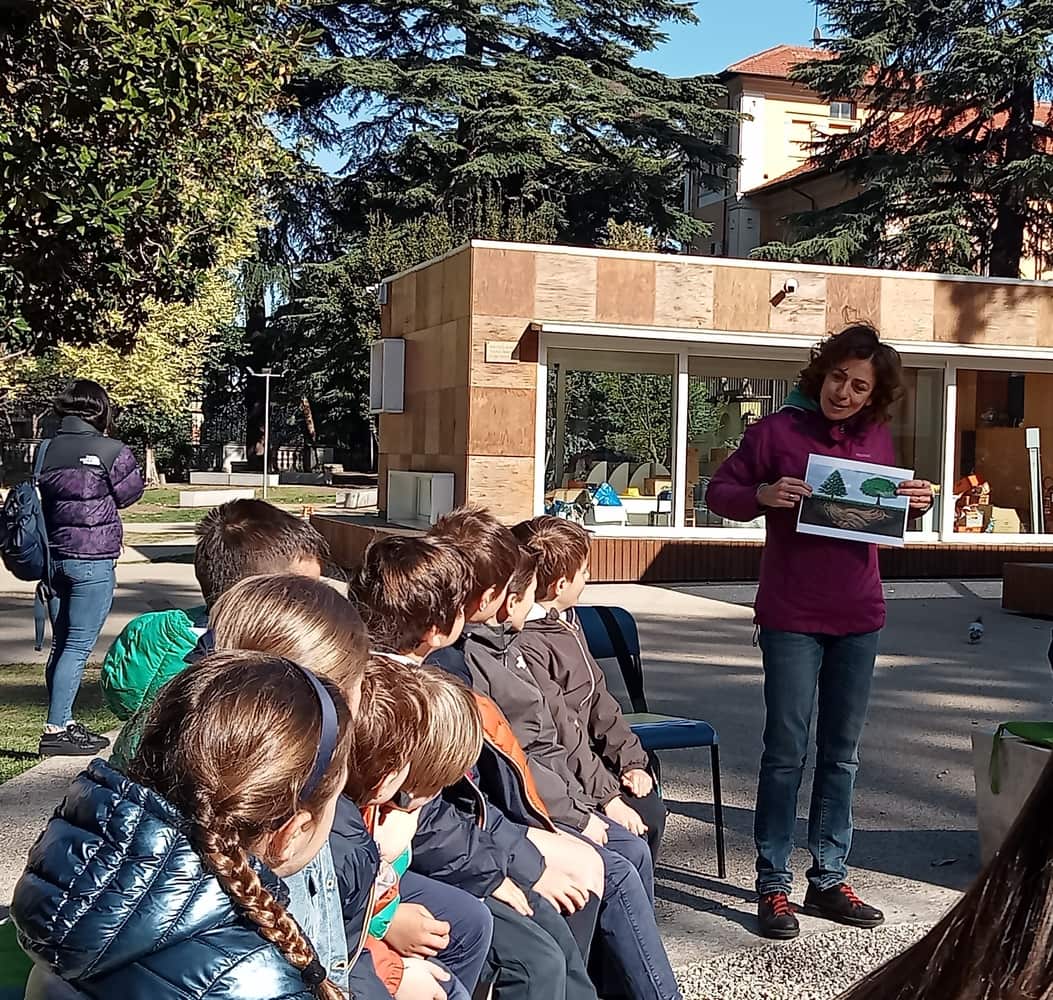
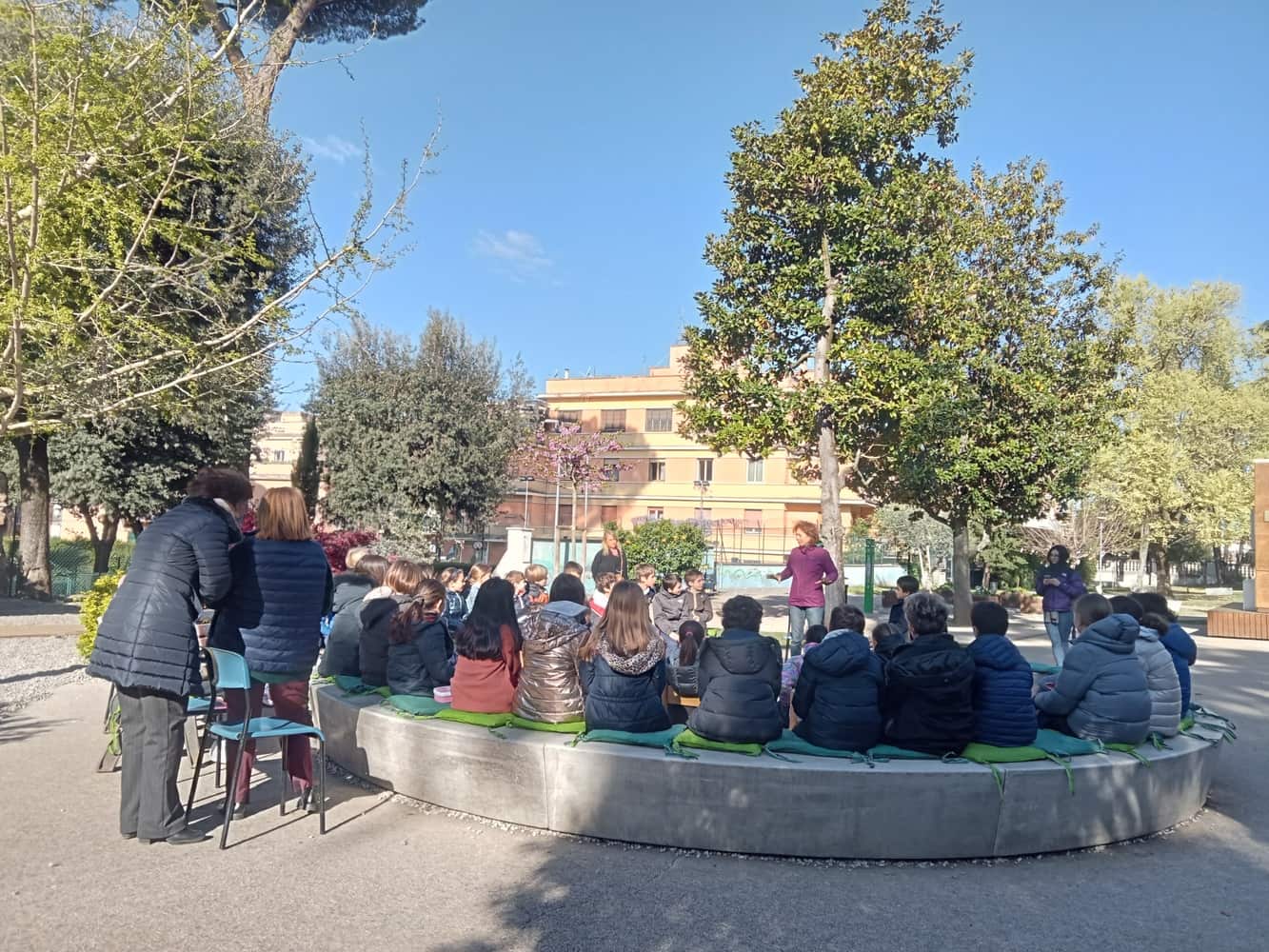
A meeting full of insights was the one experienced by the students in the Grade 3 and Grade 5 B sections of the Primary School, immersed in the greenery of the pavilions area of Istituto Marymount (outdoor learning), thanks to the talk given by Professor Lina Fusaro, an ecologist who works at the National Research Council (CNR) and studies the response of tree species to environmental stresses of both natural and human origin, estimating the benefits that vegetation provides to the urban population.
Below we share the account of the intense and interesting day in which our students took part in the event with great interest and enthusiasm; a report by teachers Lidia Tavani and Amy Alison Bivin, Climate Action Leaders at our school and Ambassador for Italy. Happy reading!
As part of our Climate Action School commitment, we were tasked with researching and identifying a Keystone Species that represents our country and connects Marymount with climate science, personal identity and our school culture. We chose the olive tree as it plays a key role in Italy’s environment, diet and culture. Subsequently, students from elementary, middle school and high school participated in a design competition to create a logo to represent our CAS’s Keystone Species.
If I Were a Tree: A Green Day!
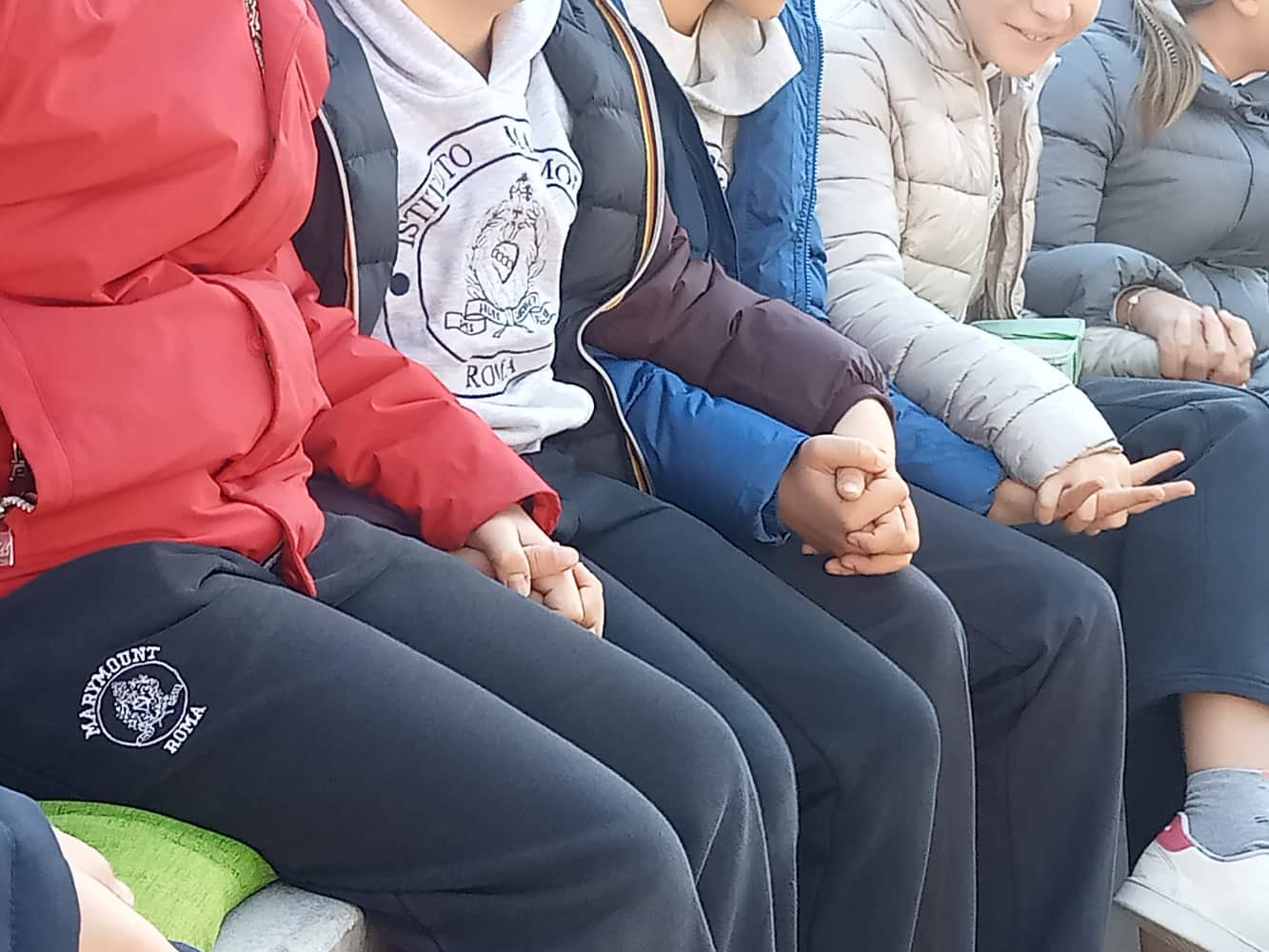
Sitting in a circle under Ginkgo, the tree that the children now consider their friend, we listened carefully to Professor Fusaro’s talk. First we reviewed the functions of the tree’s main parts (the roots, the trunk, the leaves…), trying to put ourselves in their place and having engaging experiences that amused and moved us. We held hands, interlacing our fingers like roots…. “I can feel it crushing me,” someone observes. “Yes, it happens – replies Professor Fusaro – that the roots of one tree can crush the roots of another tree, and there is always a reason. Let’s try to think: what could it mean? What might that tree be communicating to the other tree?” From the start we entered an interactive learning environment that the children greatly enjoyed, taking part with a great many questions and observations.
Together we discussed the different resources and abilities that plants use to interact with the environment and communicate with one another, bringing their needs into focus, along with the contribution they make to human life not only from a material standpoint, but also an emotional and psychological one.
“The tree that makes me feel at home – a girl tells us – is the Magnolia, because when we were in lockdown I had my computer next to a window where I could see the Magnolia and I always looked at it!” One child’s last question conveys the climate of immersive participation we experienced: “Do trees have a heart inside them?” “Do the trunks of trees have a heart?” then he added, “the olive tree makes me feel at home because when my Grandad died, my dad planted an olive tree at our school” and said “when I see the tree it reminds me he is with me in my heart every day.” “Trees – replies the professor – do not have a specific organ with the functions that we associate with the heart or the brain, but they have a more rational part and a more sensitive and perceptive part that work together in an integrated way.”
Nature – human beings included – is a single, integrated system; it works well when we respect these processes of interconnection: the more we live it, the more we feel it living within us in a spontaneous way.
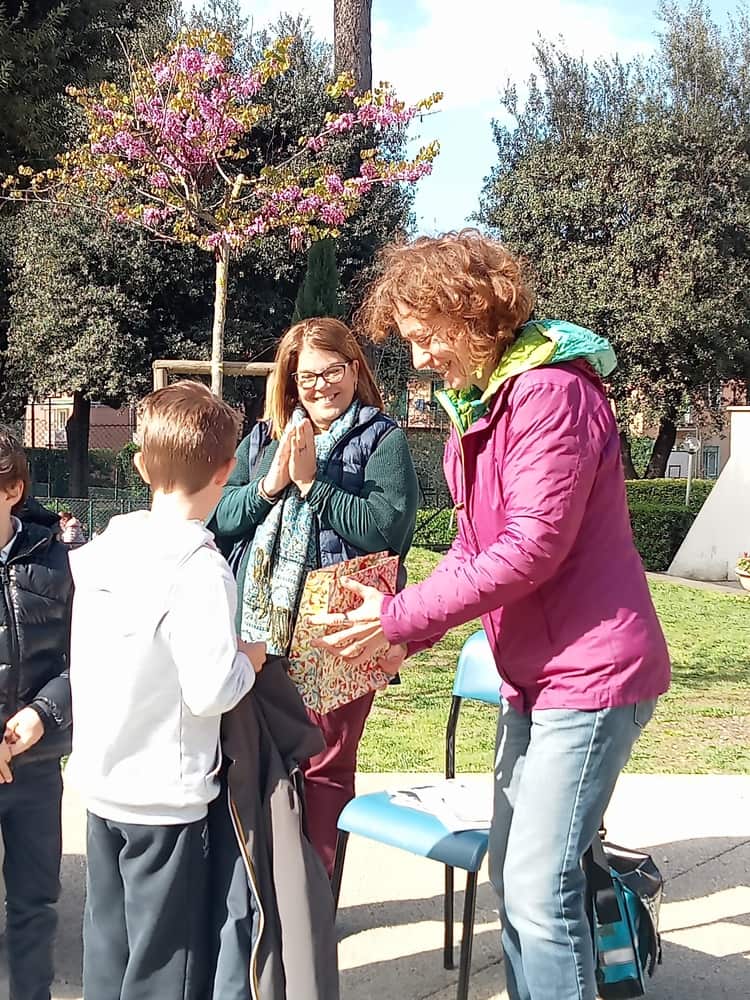
Thank you again, Professor Fusaro!