· High School
EUROPA EXPERIENCE: LEARNING TO BE EUROPEAN CITIZENS
A captivating role-playing game in the heart of our city brings us closer to the European institutions. It is one of the things we discovered together with the students from Thessaloniki who visited us from January 21 to 26 thanks to the Erasmus+ program. Here are the reflections and the storyboard of our Margherita Aprile.
“To be Italians in the world, we must be Europeans in Italy.” These words were spoken several decades ago by the industrialist Gianni Agnelli, but they still communicate with great effectiveness the need to make young Italians aware of the importance of developing a sense of active citizenship in the European context. Very often, in fact, the European Union is perceived as a body far removed from people’s lives, and people are often not truly aware of how the various institutions work (among them, only the Parliament seems to enjoy some sympathy, the only body whose members the citizens of the member countries can elect directly).
That is why, in an increasingly cosmopolitan and interconnected society, the Erasmus+ program represents an essential opportunity to get to know other cultures and understand what being a European citizen really means, and it is a great stroke of luck that for some years now it has also involved upper secondary schools, after having allowed tens of thousands of university students to strengthen their sense of citizenship and belonging to Europe.
Among the populations with one of the highest rates of disaffection toward the European Union, it is perhaps not surprising that the Greek one ranks first: according to a survey conducted by Eurobarometer and relayed by Openpolis, in 2022 the distrust of Hellenic citizens neared worrying peaks of 53 percent, a sentiment probably born from the austerity measures implemented during the 2009 debt crisis.
Awareness of this figure perhaps made the exchange with the Geniko Lykeio Diapolitismikis Ekpaidefsis Evosmou school of Thessaloniki even more interesting; last November it welcomed a delegation of our students and was in turn a guest at our school during the week without classes, from January 21 to 26. There is no other country in Europe whose cultural roots are so closely tied to ours; history, literature, philosophy, art, mathematics and sports have taught us so. The very name of Europe is a creation of Greek myth and of the ancient Greek language.
Perhaps we felt called to a challenge, and that is why one of the first activities we decided to share with the Greek students staying with our families was the visit to Europa Experience, a project born in Berlin in 2016 that opened its Italian location in Rome in 2022, presenting itself as a multimedia space to bring the European institutions within a few steps of citizens. Our Erasmus group enthusiastically took part in the activity dedicated to the former President of the European Parliament David Sassoli, trying their hand at a role-playing game aimed at understanding how the European institutions work: for a few hours we set aside our roles as students to step into the shoes of experts, members of parliament and stakeholders and to experience the processes of debate and resolution on issues of great current relevance.
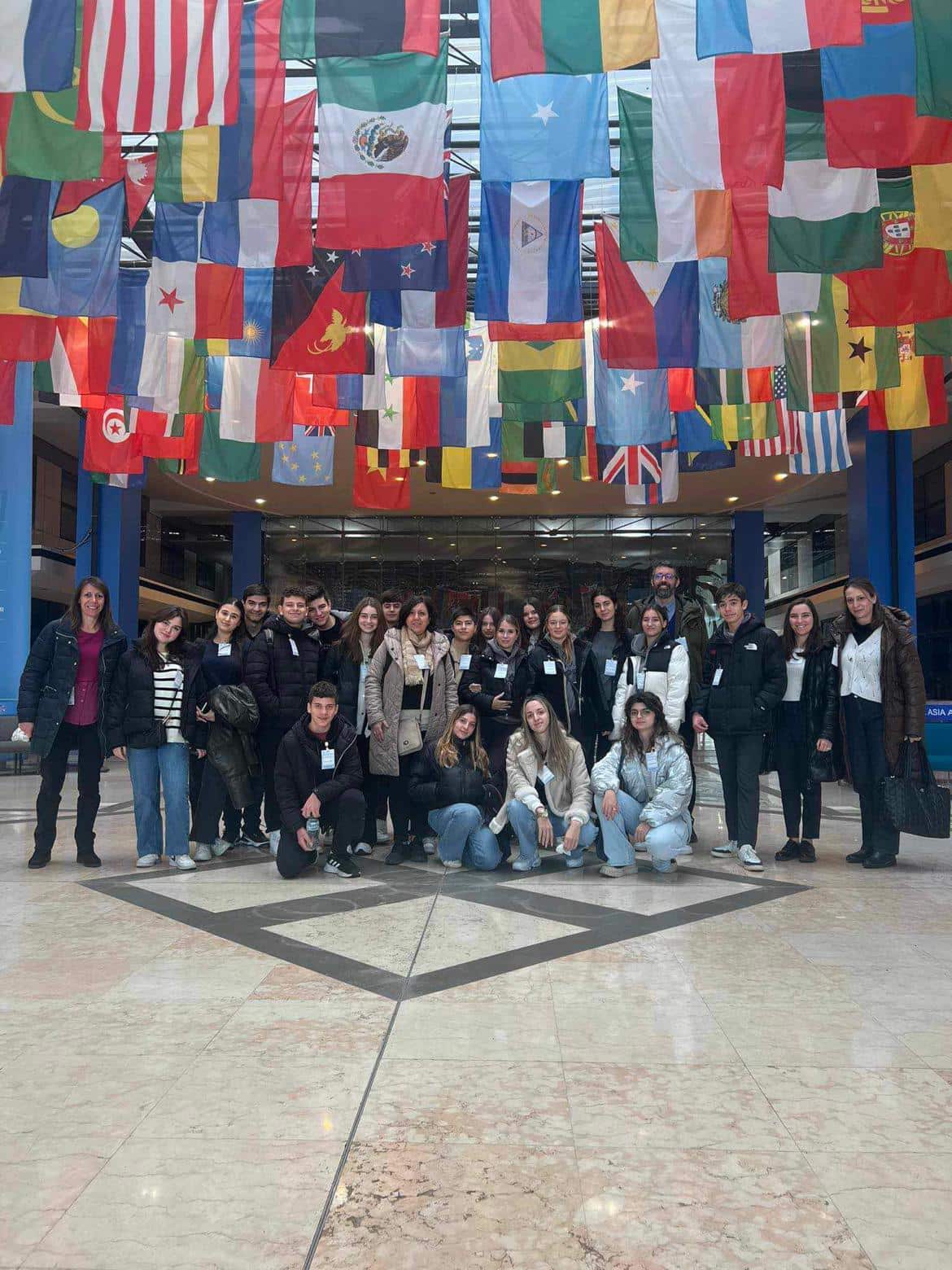
But the richness of a cultural exchange lies not only in bringing students closer to new cultures, but also in deepening aspects of one’s own cultural identity that are often pushed into the background. Besides Europa Experience, experiences such as the visits to the Palatine Hill archaeological park and the Capitoline Museums, both places of fundamental importance for getting to know our city’s historical heritage, were extremely formative.
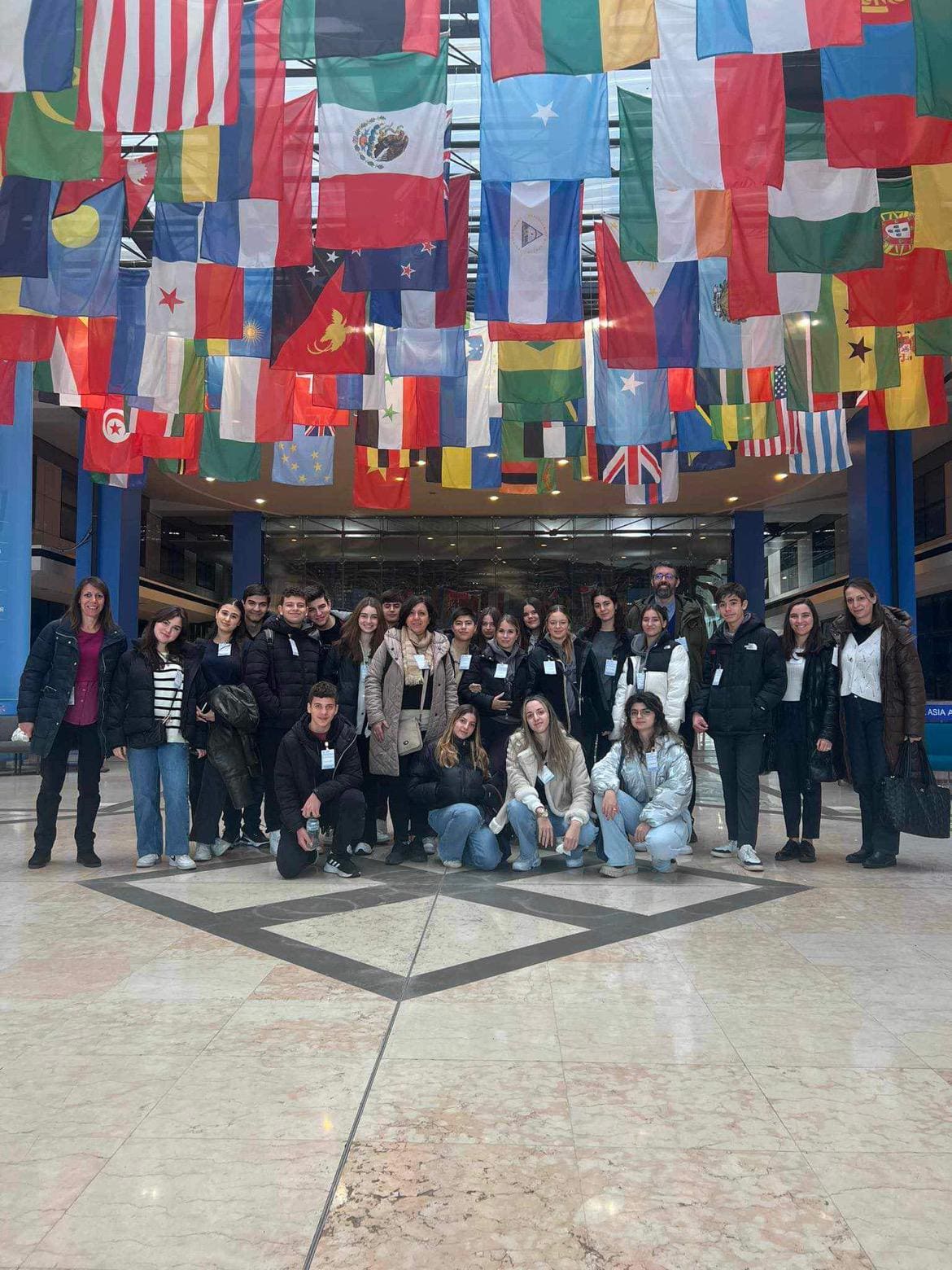
Another essential aspect of the exchange program is helping to develop a sense of affinity among inhabitants of different countries: in our case, noticing similarities and differences between our cultures was an important stimulus to reflect on what it means to be cosmopolitan citizens. In this regard, the visit to the Greek Orthodox church of San Teodoro provided an important prompt for reflection on the religious involvement of the two nations, just as the visit to the United Nations agency FAO encouraged us students to reflect on the sustainability of our cities.
Finally, even the more worldly and apparently frivolous aspects, such as explaining how pasta alla carbonara is prepared or learning the typical dances of the Macedonian region, helped increase in us students, of both nationalities and of every age, a sense of belonging to a reality with a broader scope than the one tied to the traditional concept of the nation-state.
Margherita Aprile, age 17, Fourth Year A, Classical High School (journalism workshop)