

· News
Electra, a tragedy without catharsis
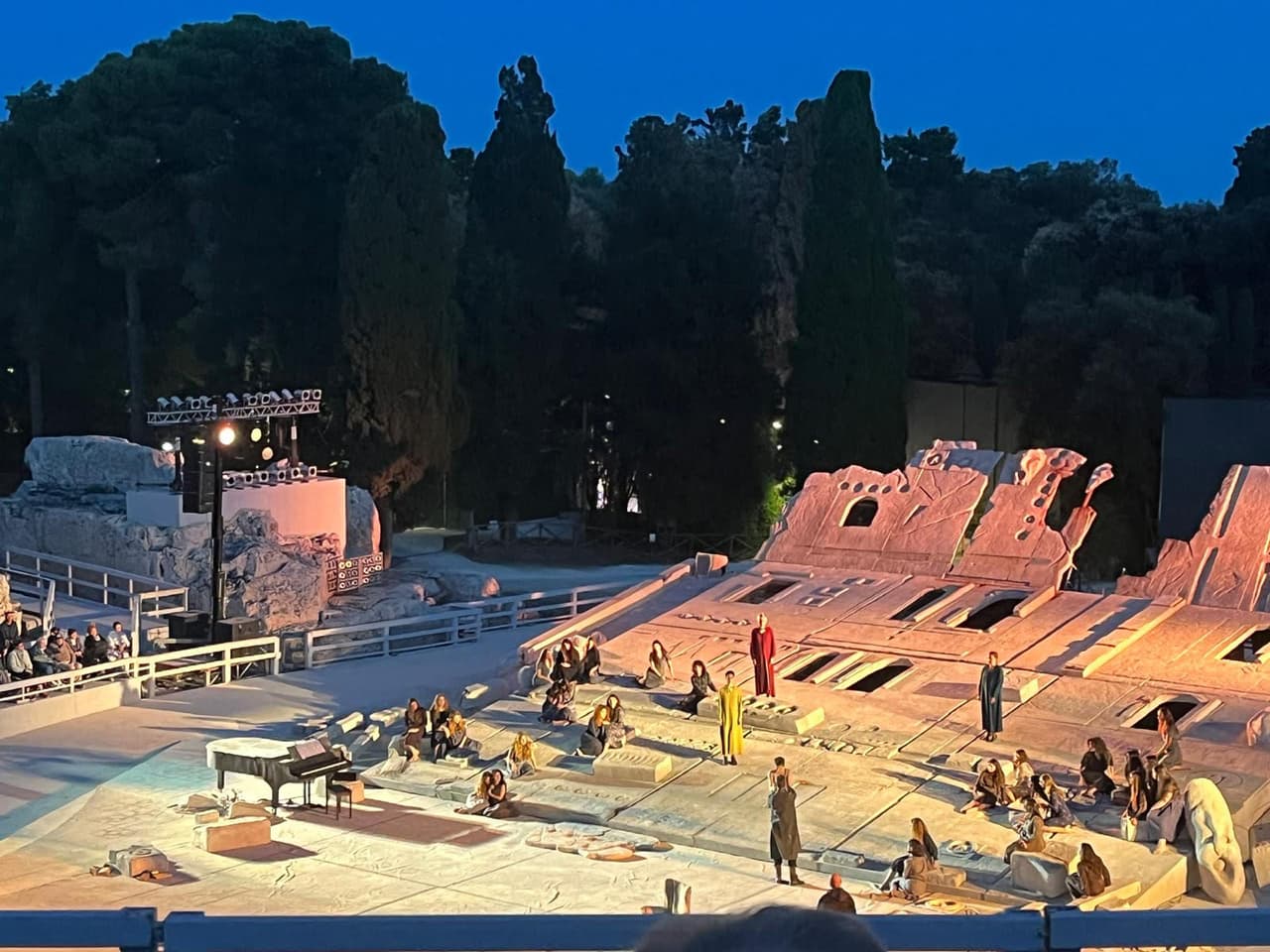
A gathering for classical high schools from all over Italy: this year the Greek Theater of Syracuse gave our students an unforgettable experience too.
The upper three years of the High School’s classical track took part with enthusiasm in the new edition of the Season at the Greek Theater of Syracuse, a collective rite that for over a century has renewed the bond between an ever-wider audience and the roots of Western culture. On May 23, our classes attended the performance of Sophocles’ “Electra” in the refined staging by Roberto Andò, who in the role of Orestes’ older sister chose and directed an untamed, primitive Sonia Bergamasco, deeply tied to dark and visceral forces, in dialogue more with the dead than with the living.
From the outset she dominates the stage, in an emotional arc that runs from despair through the joy of recognizing her brother and leads to the fulfillment of an ancient vengeance: the death of Aegisthus and Clytemnestra, guilty of the murder of Agamemnon. And yet, as so often happens in Greek tragedy, blood does not appease, does not redeem, does not console: Electra neither asks for justice nor seeks reason, but is consumed by grief and accuses those closest to her of being unable to hate with her own intensity, pinned to a void that no act of violence can fill with meaning. The “emotional disobedience” Andò spoke of in his interviews also makes her immediately akin to Antigone: both assert themselves on stage through the stubbornness with which they try to mend the lacerations of their conscience, becoming the embodiment of the paroxysmal conflicts that most characterize the human condition.
The staging was enriched by artistic contributions of great caliber: the intense and vibrant performance of Anna Bonaiuto as Clytemnestra, the original music of Giovanni Sollima, the choreographic movements of Luna Cenere, the costumes of Daniela Cernigliaro, the lighting design of Gianni Carluccio, the sound environment curated by Hubert Westkemper.
But for the students the experience was not limited to the stage. Entering the Greek Theater, the shared silence, the natural light of the sunset accompanying the start of the performance made for a generative moment, which made them aware of the imaginative and communicative power of the texts they patiently study and analyze in their school lessons, and which thus prove, still today, a precious instrument for educating citizens, able to train us toward doubt, complexity and empathy.