· High School
Archive echoes: on the trail of the gold the Nazis carried off
The movements of the gold bars between 1943 and 1945, the Azzolini trial, and the international situation in the years 1946–1957: the PCTO (Italian work-based learning program) at the Historical Archive of the Bank of Italy revealed to our students a story they did not know and of which they now feel almost a part, as Vittoria explains in her report.
The PCTO at the Bank of Italy was truly a wonderful experience. An unexpected one, in some respects: crossing the threshold of an institution that has accompanied the history of our country in its role of regulating the economy, I never would have thought I would find such an open and welcoming atmosphere. I am extremely grateful for this, because it was precisely the welcoming helpfulness of the staff, and the educational value that from the very start was attributed to every mistake or imperfection, that allowed all of us to get the most out of what turned out to be a genuine life experience.
Over the course of a week, in fact, having arrived as simple students, we took on the role of Bank of Italy employees, retracing—on a small scale—the typical workday of a staff member of the institution’s imposing Historical Archive.
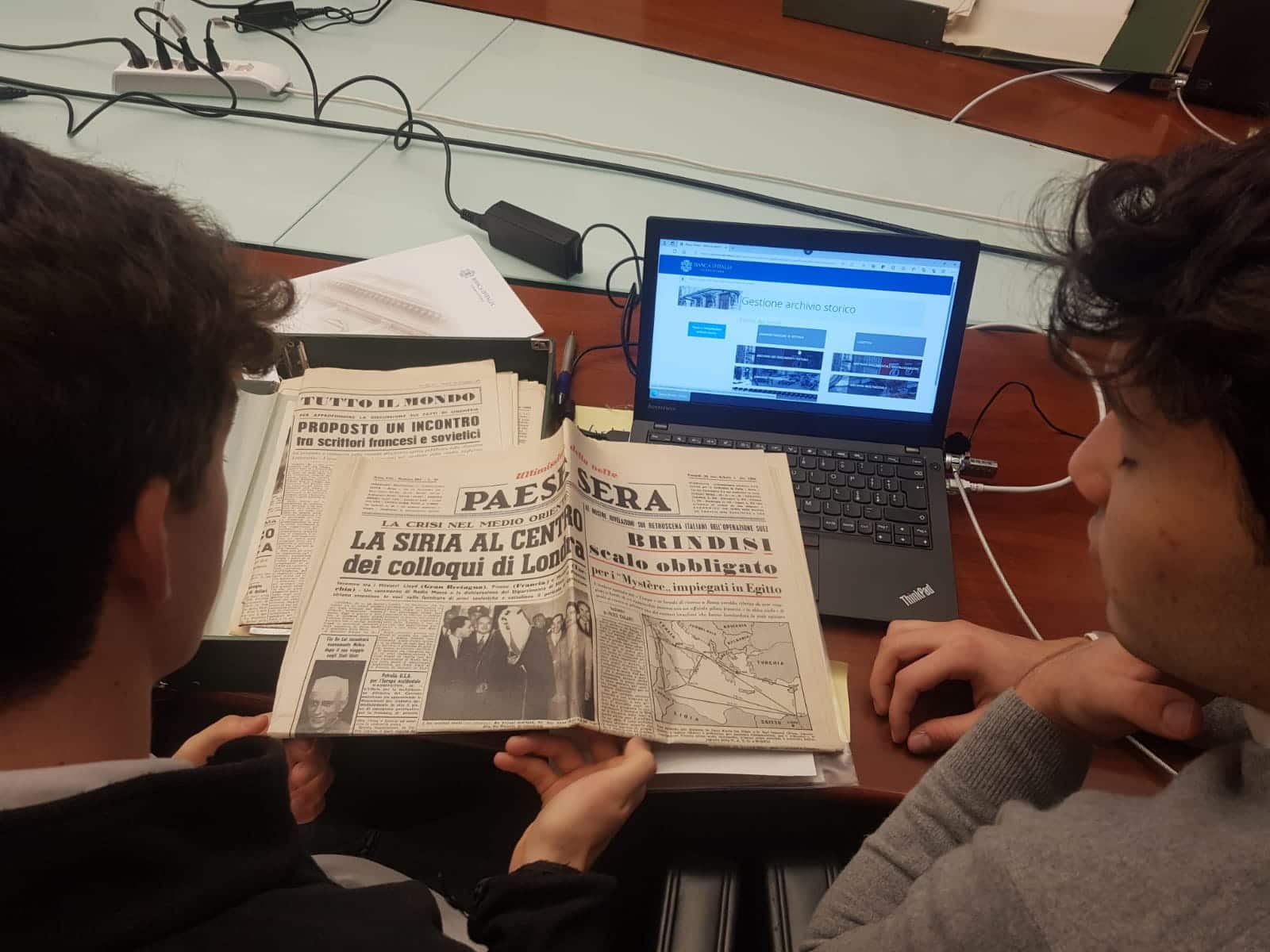
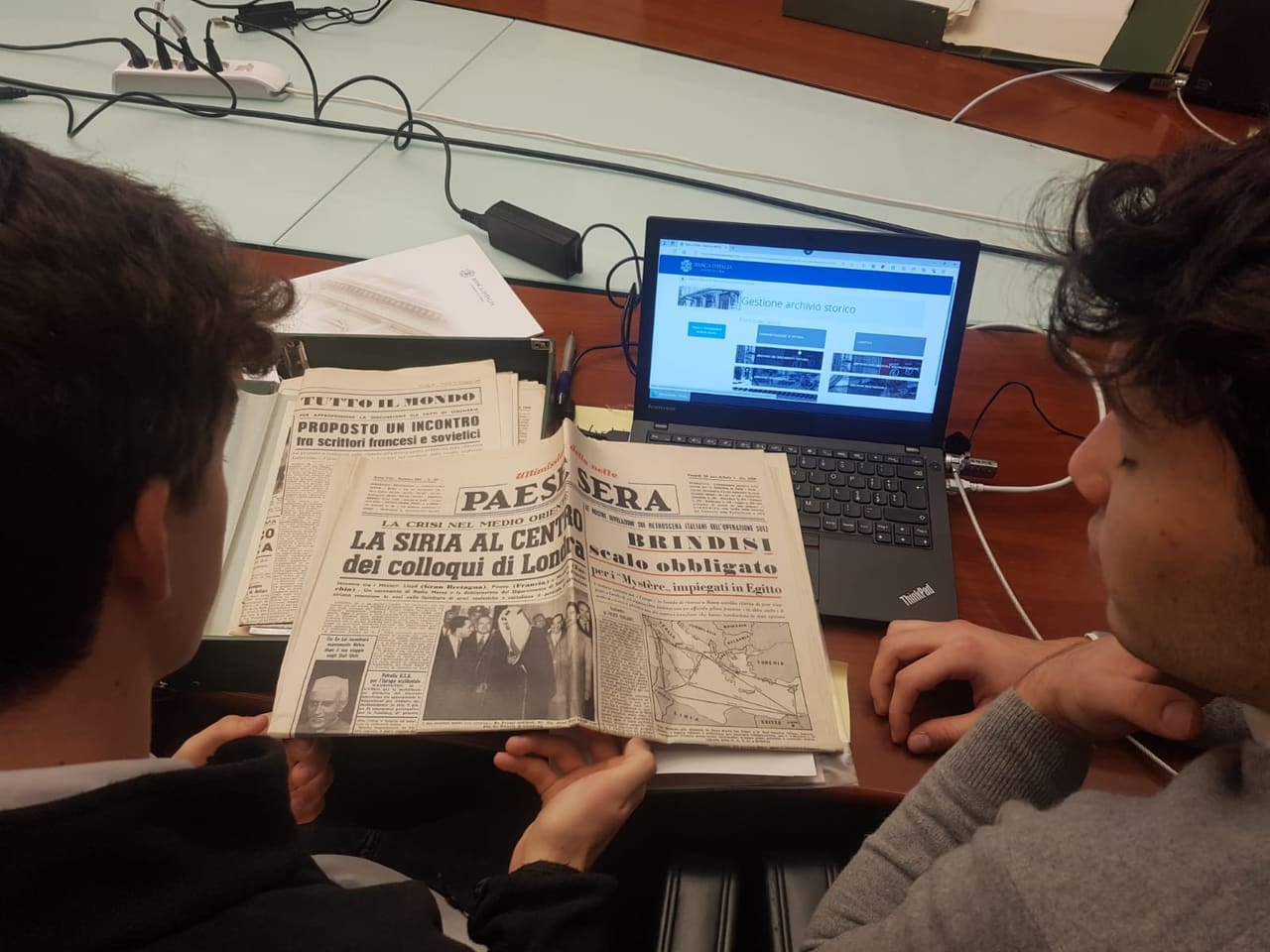
Our path began with the cataloging activity; we were handed several boxes containing documents relating to the gold looted by the Germans during World War II. The activity, carried out in pairs, consisted of analyzing the contents of each box, organized in files and sub-files, and then entering what we found into the ASBI platform (Historical Archive of the Bank of Italy). It is hard to describe in words what I felt when I opened the first box. I was overwhelmed by a river of information and intricate episodes that I had never known about; reading the documents and putting together the various pieces of the affair, I almost felt as if I were part of it. Touching those pieces of paper charged with meaning, I was able to immerse myself in a dimension very different from the one I had started from. I understood the true importance of the archivist, guardian of our history and, therefore, of our evolution.
Over the course of the week we came into contact with different types of sources held in the archive of the Bank of Italy; besides the numerous textual documents (such as letters, telegrams, minutes, and transcripts of telephone conversations), we had the pleasure of coming across sources of other kinds, such as photographs and memo-belts, that is, recordings made using a dictaphone. A further type of source that we had the opportunity to examine, and that particularly amused us, were the personnel files, which hold detailed descriptions, including an assessment of the level of intelligence, as well as the aspirations, of all the employees who worked at the Bank of Italy.
After spending the first two days as archivists, we were given the complex but fascinating role of researchers. This means that we were given access to thousands of documents. In groups of four, we carried out research on a specific aspect of the intricate gold affair; the topics assigned to the various groups were particularly interesting: the movements of gold between 1943 and 1945, the Azzolini trial, and the international situation in the years 1946–1957. The experience as researchers was as difficult as it was rewarding. I cannot deny that I felt a bit disoriented, at times even discouraged, in the face of the immense quantity of information at my disposal (deciphering a letter dating back to 1943 initially gave me a real block!). Nevertheless, it was definitely worth it, given the sense of fullness and accomplishment I felt in freely navigating through such decisive moments of modern history and in having successfully reconstructed a general chronology of the events attested by the documents.
Our journey ended on a high note with the presentations to our teachers of the projects we carried out during the PCTO and with an interesting immersive exhibition on the history of money at the Palazzo delle Esposizioni.
To conclude, I can perhaps say that this very special, very engaging week has fueled in me a new approach to historical information, perceived with a new concreteness. The fantastic tutors who guided us through this journey rich in discoveries managed to pass on to us the passion, so alive, that binds them to their work and to make us understand the extraordinary importance of what they do. It was a path that was, to say the least, moving. The possibility of touching with our own hands a part of the history that has made us who we are today, that has helped shape our identity, is truly priceless. My classmate Irene Zu, in the closing speech with which we wanted to thank and say goodbye to those who for a week had been our work ‘colleagues,’ managed to touch the hearts of professors, tutors, and classmates by declaring: “Today, in a world characterized by uncontrolled flows of information, where the truth can be distorted or even manipulated, archives take on a crucial role in defending our historical understanding and our collective identity. George Orwell said: ‘Who controls the past controls the future. Who controls the present controls the past.’ Archives, therefore, become the guardians of historical truth, preventing our past from being distorted or manipulated.” Or forgotten, I would add.
Vittoria Emma Boccia, 16 years old, fourth-year (IV A) Scientific High School