· High School
AND THEN WE CAME OUT TO SEE THE STARS AGAIN
AND THEN WE CAME OUT TO SEE THE STARS AGAIN
The beginning of this new year was marked, thanks to our Professor Federica Turco, by a new course of study: Dante’s literature. We covered Dante’s biography and his minor works, but our attention fell in particular on the most important and renowned poem of our culture: “the Divine Comedy.”
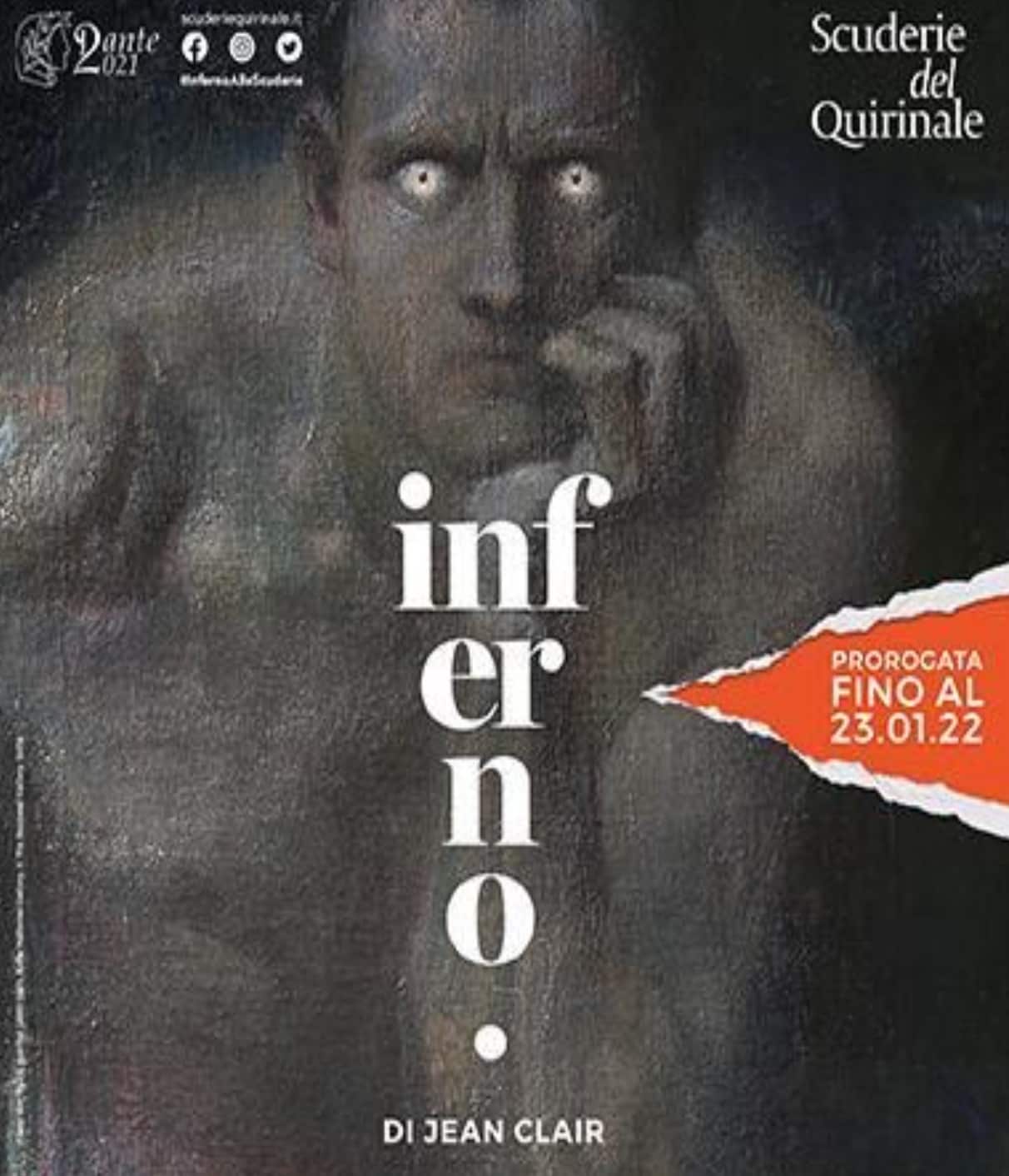
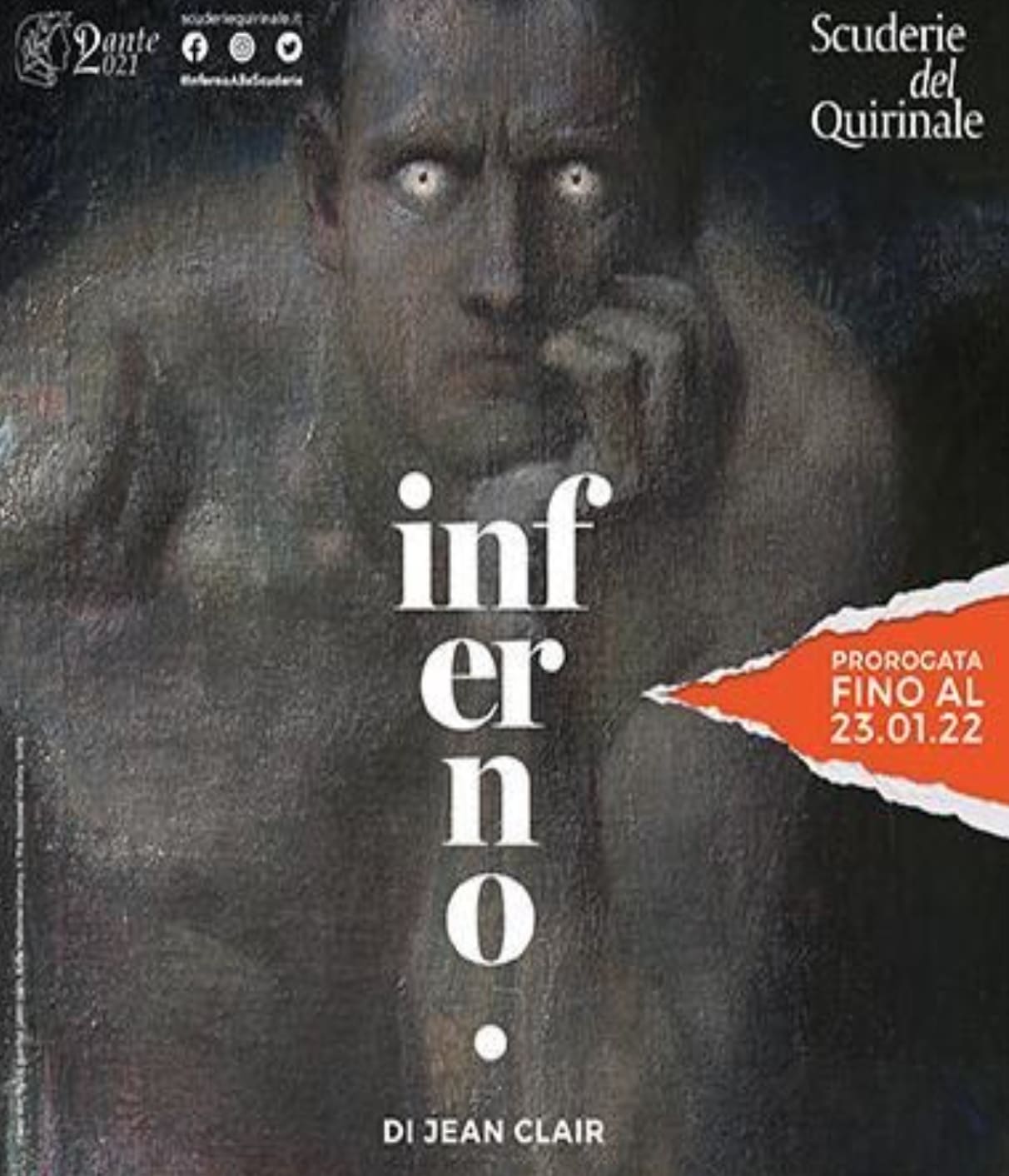
The latter, in fact, awakened a great interest in each of us, and so—having learned of the opportunity to visit the “Inferno” exhibition at the Scuderie del Quirinale—we put the proposal to our Principal.
The school and the entire teaching staff accepted our initiative with great admiration, and so on Friday, January 21, together with Professors Eleonora Fortunato, Sofia Romeo, and Federica Turco, we visited an extraordinary infernal exhibition, ranging from literature to art history and to economic and social history, and containing more than two hundred works.
Our journey into the world of the afterlife begins in the first room of the exhibition.
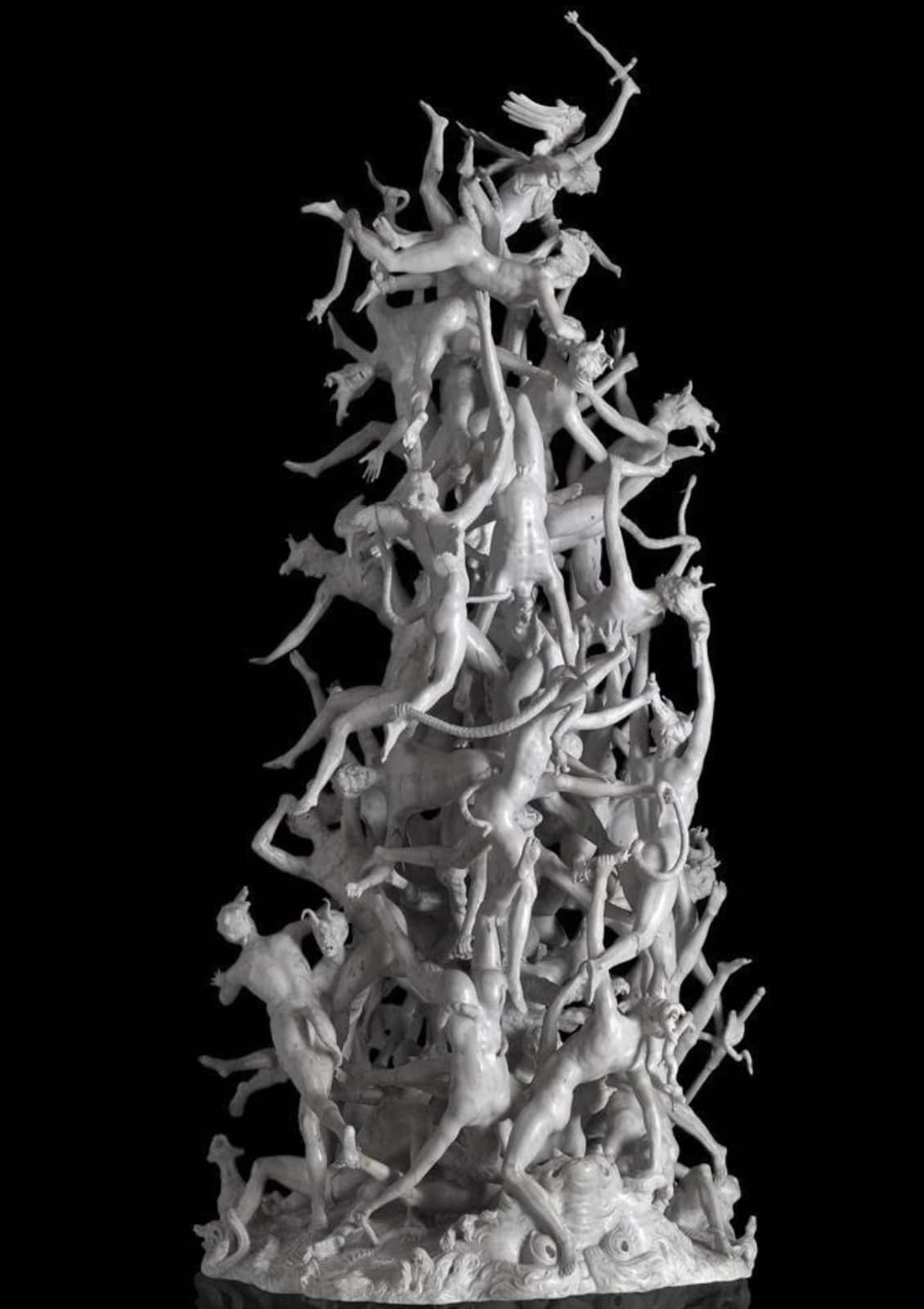
Midway upon the journey of our life we found ourselves in front of the extraordinary sculpture by the Paduan artist Agostino Fasolato: a veritable pyramid of sixty figurines carved from a single piece of Carrara marble. At the top of the pyramid was Saint Michael, with his sword drawn and his shield strapped on, driving from the heavens the angels who rebelled against God, and at the base Lucifer, the creature who had the fair semblance.
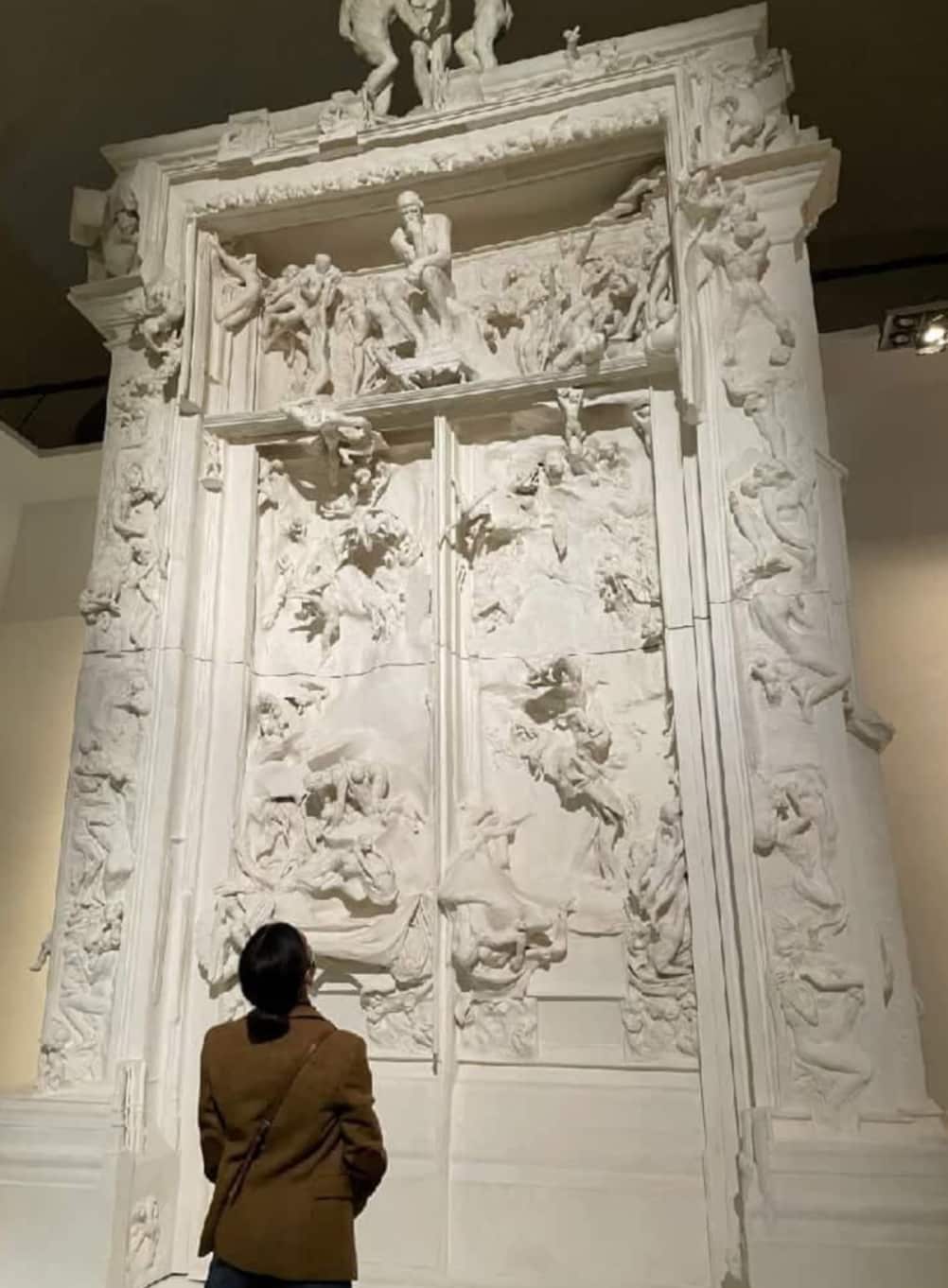
We raised our eyes and found ourselves in front of the majestic Gates of Hell by Auguste Rodin (even though we had not descended into the Ante-Inferno like our dear Dante). A plaster cast of the original seven-meter-high gate at the Musée Rodin in Paris, the sculpture was entirely decorated with high reliefs. On the trumeau was the model of the famous Thinker, on the right-hand door panel one could witness the stark depiction of Count Ugolino, while on the left were Paolo and Francesca.
The solemnity conveyed by that immense, so detailed work aroused in us such a great desire to emulate the journey undertaken by the Supreme Poet that, having crossed the infernal threshold, we began to recite those words of dark color:
Through me one goes into the city of woe,
through me one goes into eternal sorrow,
through me one goes among the lost people.
Justice moved my lofty Maker:
divine power made me,
supreme wisdom and primal love.
Before me nothing was created
except eternal things, and eternal I endure.
Abandon all hope, you who enter
Inferno, Canto III, lines 1-9
Accompanied by Dante’s words, we therefore ended up in front of the ferryman of the livid marsh, who had wheels of flame around his eyes. His eyes of embers*,* frightened us a little, but it is so willed there where there is power to do that which is willed, and so we continued on our way.
Then, suddenly, in front of us, a magnificent chiaroscuro of Paolo and Francesca. Francesca was lovingly held up by Paolo, and the two figures were enveloped in a blazing storm. Both had been victims of that love, which swiftly takes hold in a gentle heart*,* but despite this they held hands and seemed so light upon the wind. In the work of Henri Jean Guillaume Martin, Francesca moreover seems to address these words to Dante:
Love, which pardons no beloved from loving,
seized me with such strong delight in this man,
that, as you see, it does not leave me even now.
Love led us to one death.
Inferno, Canto V, lines 103-106
Having gone up to the upper floor of the exhibition, here we were in an infernal reality totally different from Dante’s legacy. We were admiring the so-called “Hell on Earth.”
Little by little the works multiplied, but what we were witnessing was not an afterlife made only of flames, pits, and Dantean circles, but rather a more tangible hell, which we human beings have created for ourselves by staining ourselves with atrocities throughout history.
Works such as “Le petit camp à Buchenwald” by Boris Taslitzky denounce the horrors of war, totalitarianism, and the cruelty of extermination. We human beings are the architects of our own misfortunes and, through this different interpretation of hell, Jean Clair increases our awareness and our sensitivity to the level of inhumanity that some human beings, unworthy of being called such, can reach.
Finally, at the culmination of the exhibition, we came out to see the stars again.
Paintings of starry skies emerged on every wall and conveyed to us a symbolic feeling of great hope. That same hope that, in a historical moment as delicate as ours, is often lacking. The pandemic, confinement at home, and distance from our normal, beloved life have made us perceive the world from a completely different perspective. In these years we have learned to appreciate the little things and not to take for granted those “ordinary” aspects of life that were previously imperceptible to us.
The end of the epidemic seems so far away in our eyes, but we must continue to nurture hope, because we will manage to regain our rightful freedom and we will finally be able to see the stars again.
Lucrezia Cerulli, Class 3B, Classical High School, Istituto Marymount