· High School
Cross-Pollination on Stage: Our Alcestis
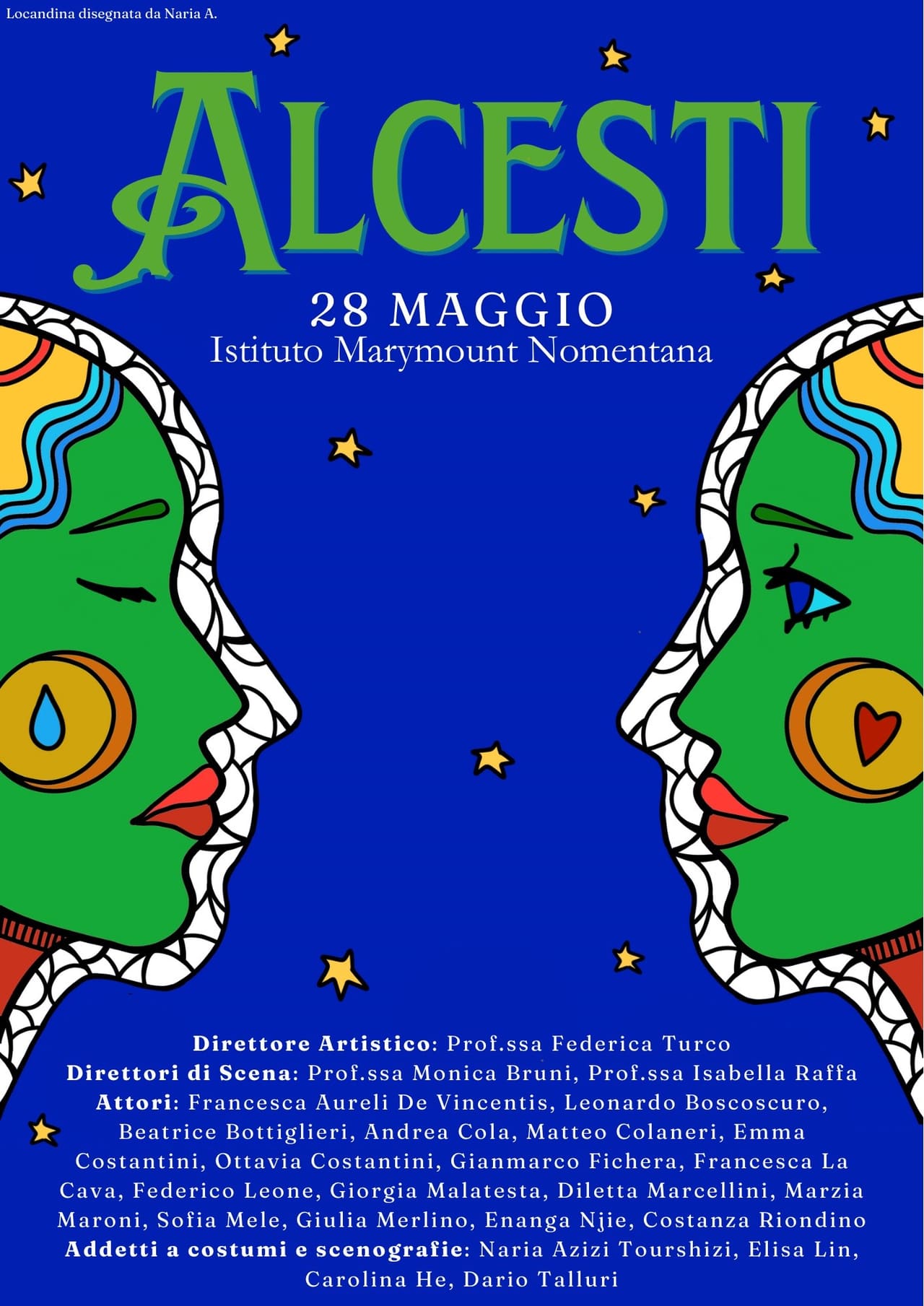
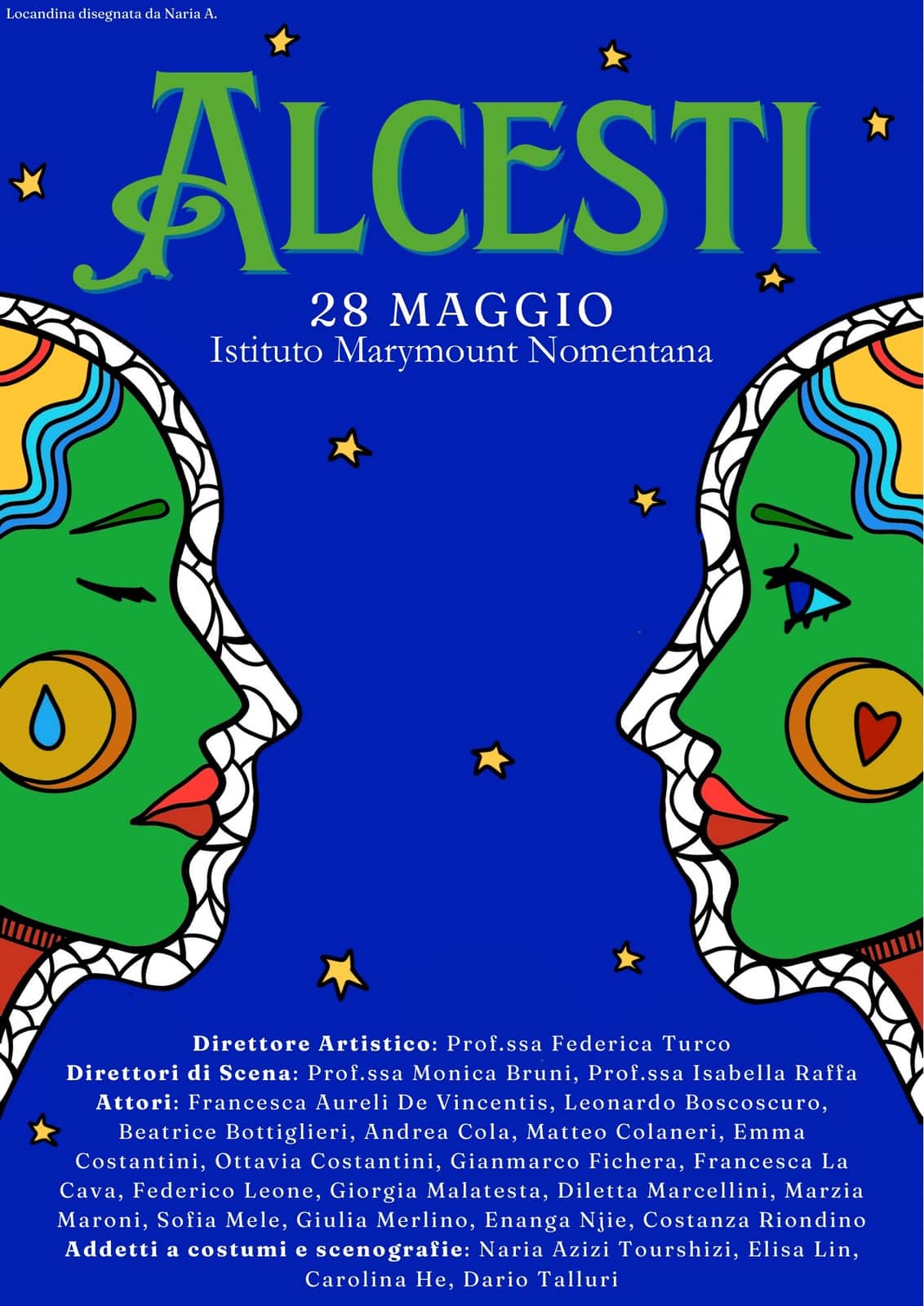
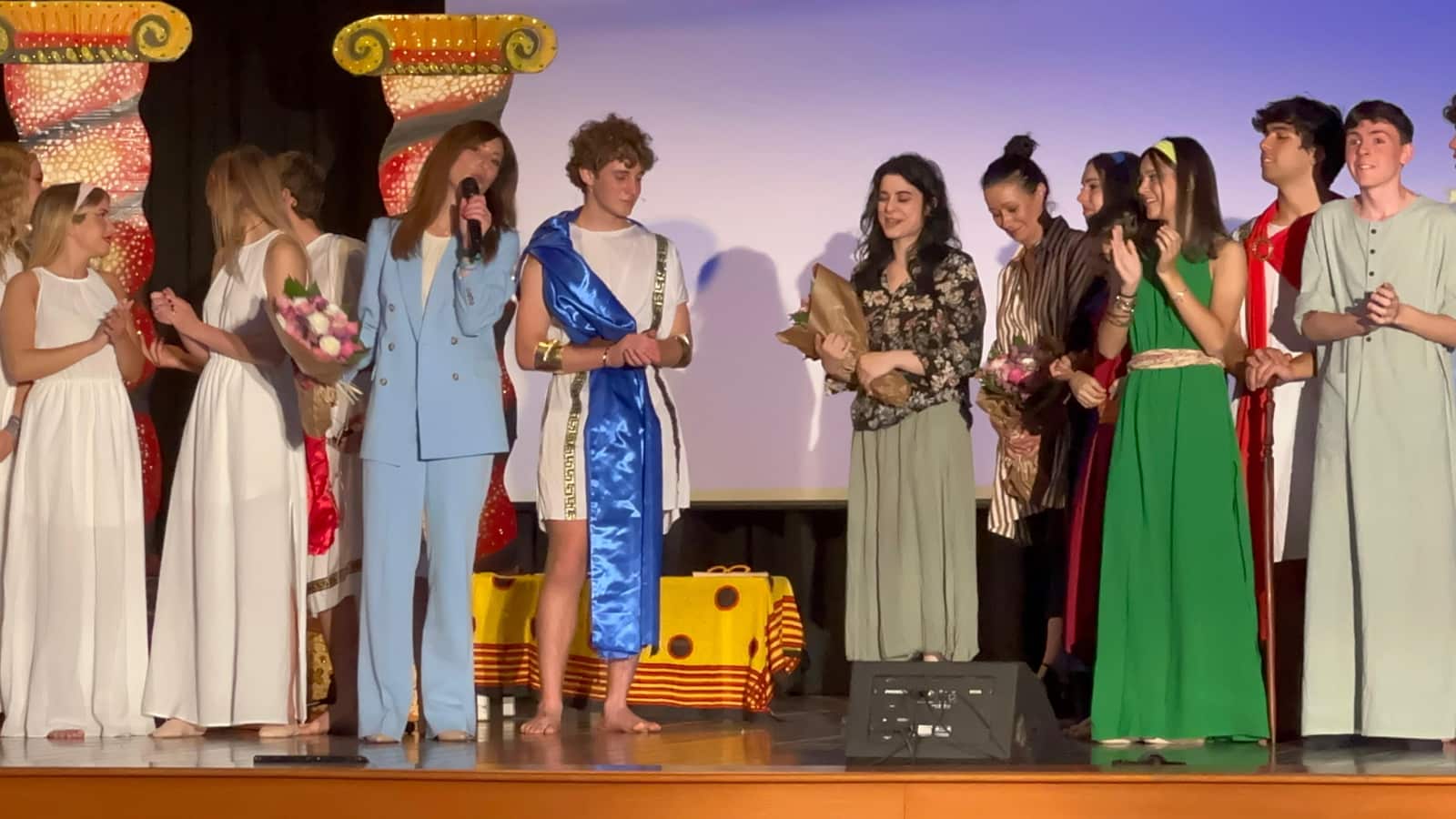
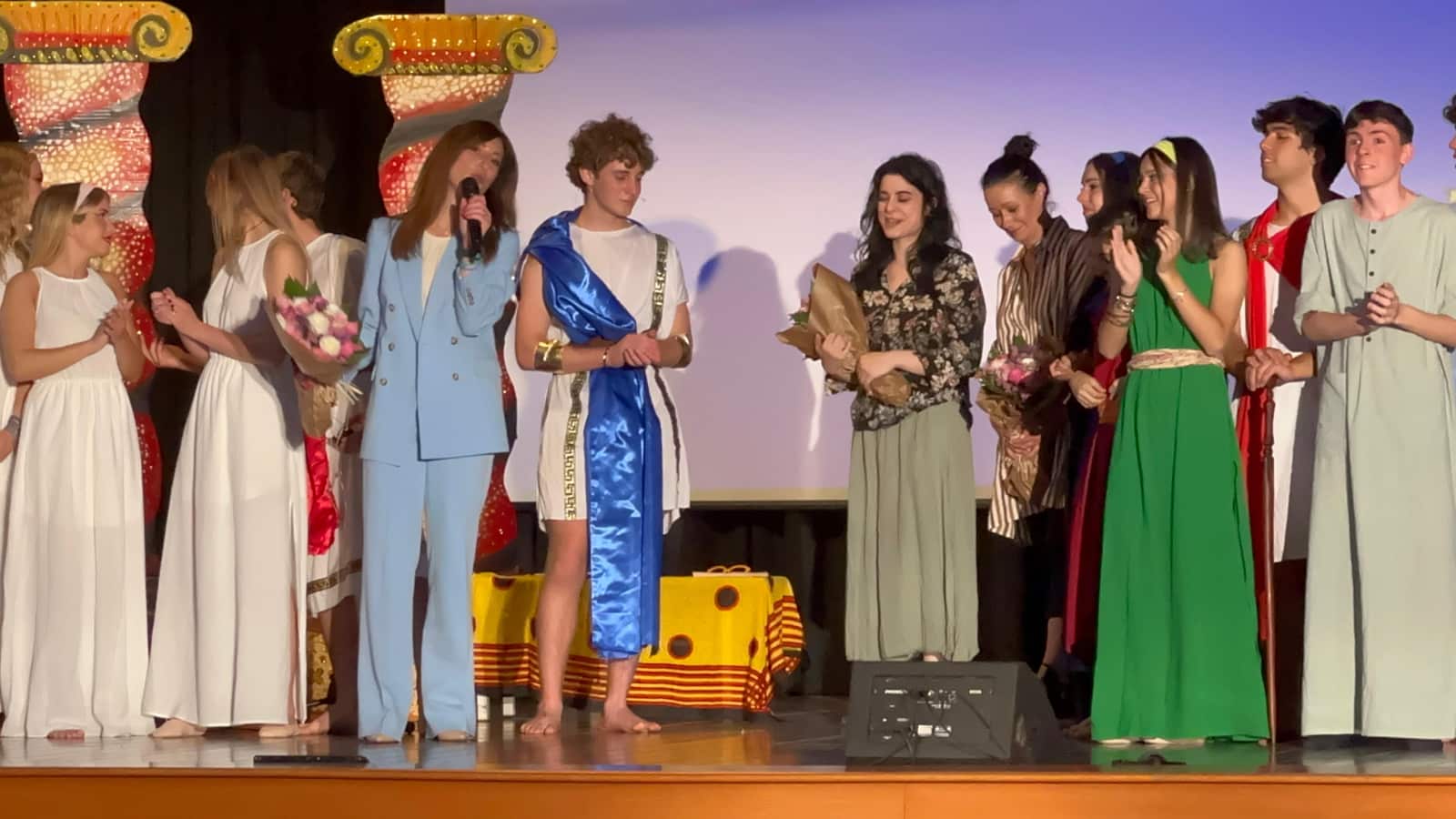
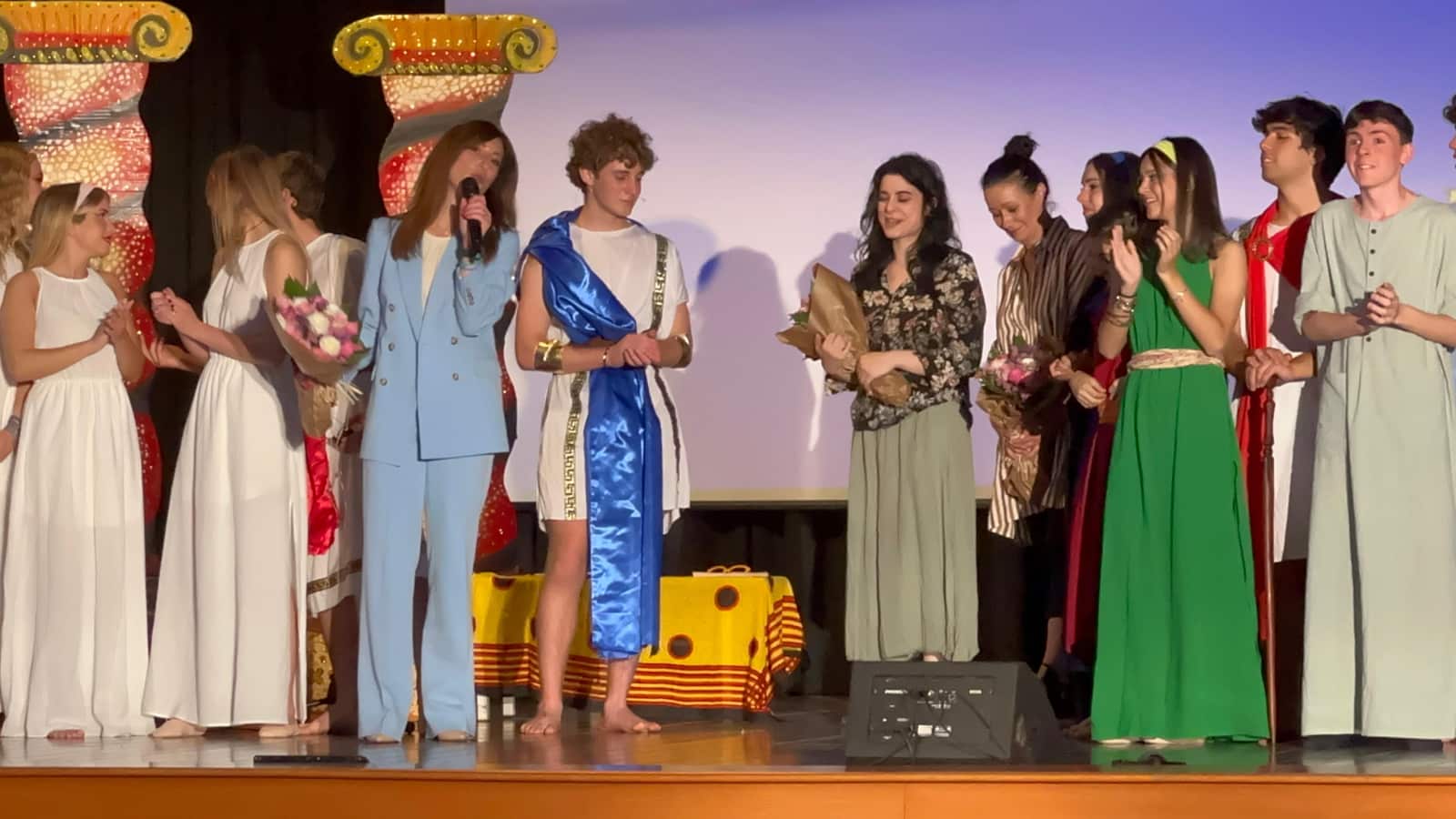
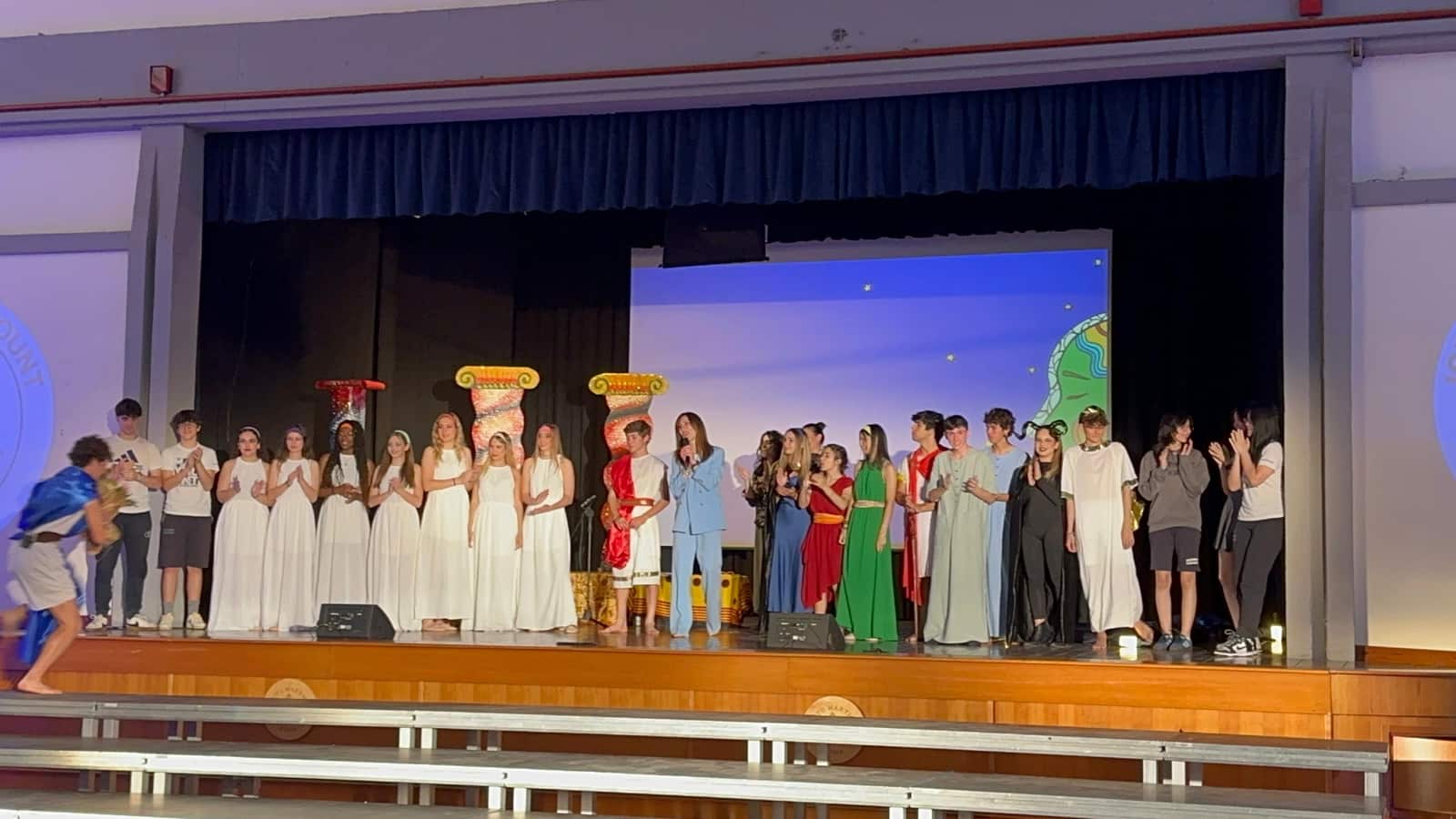
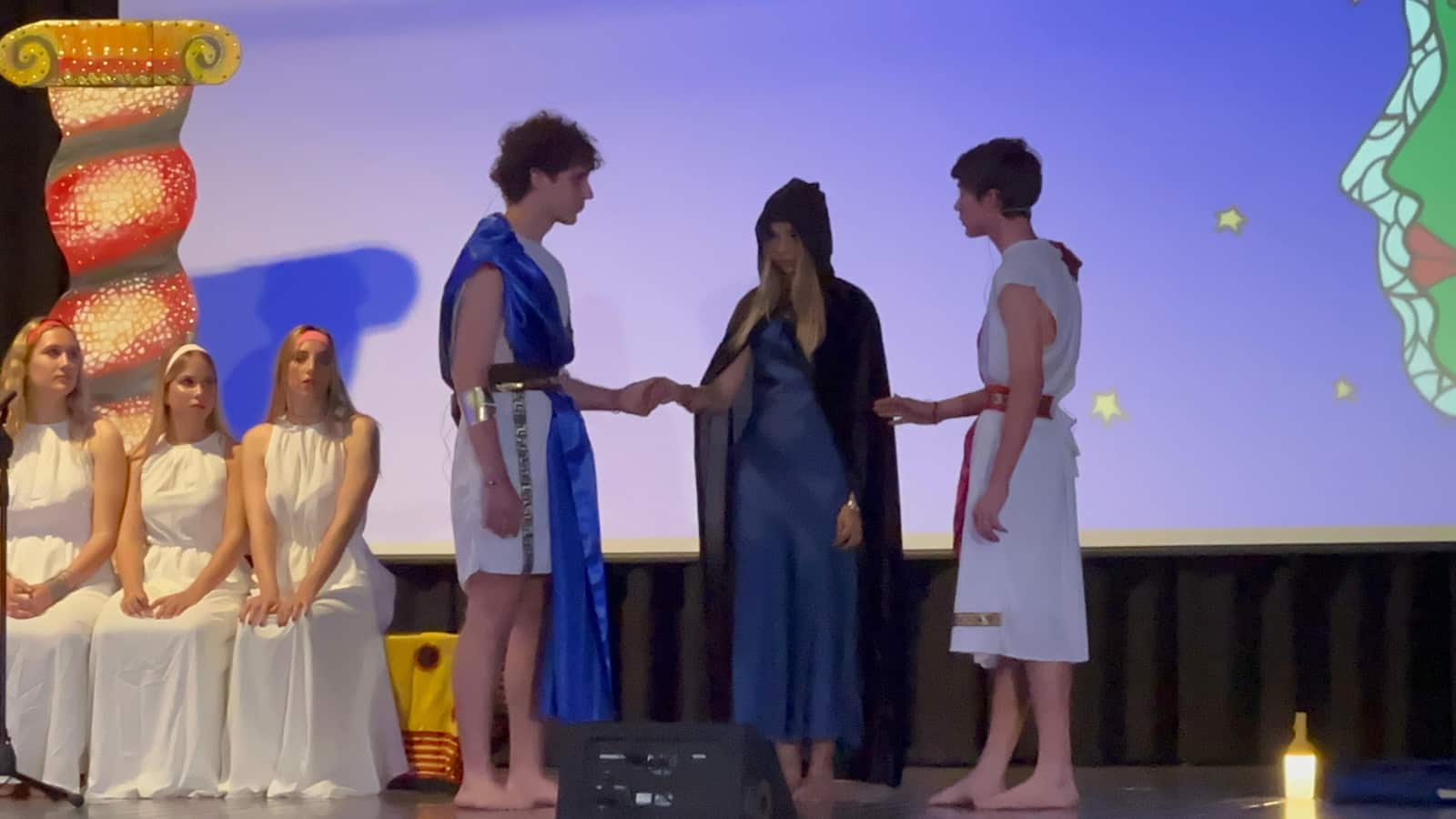
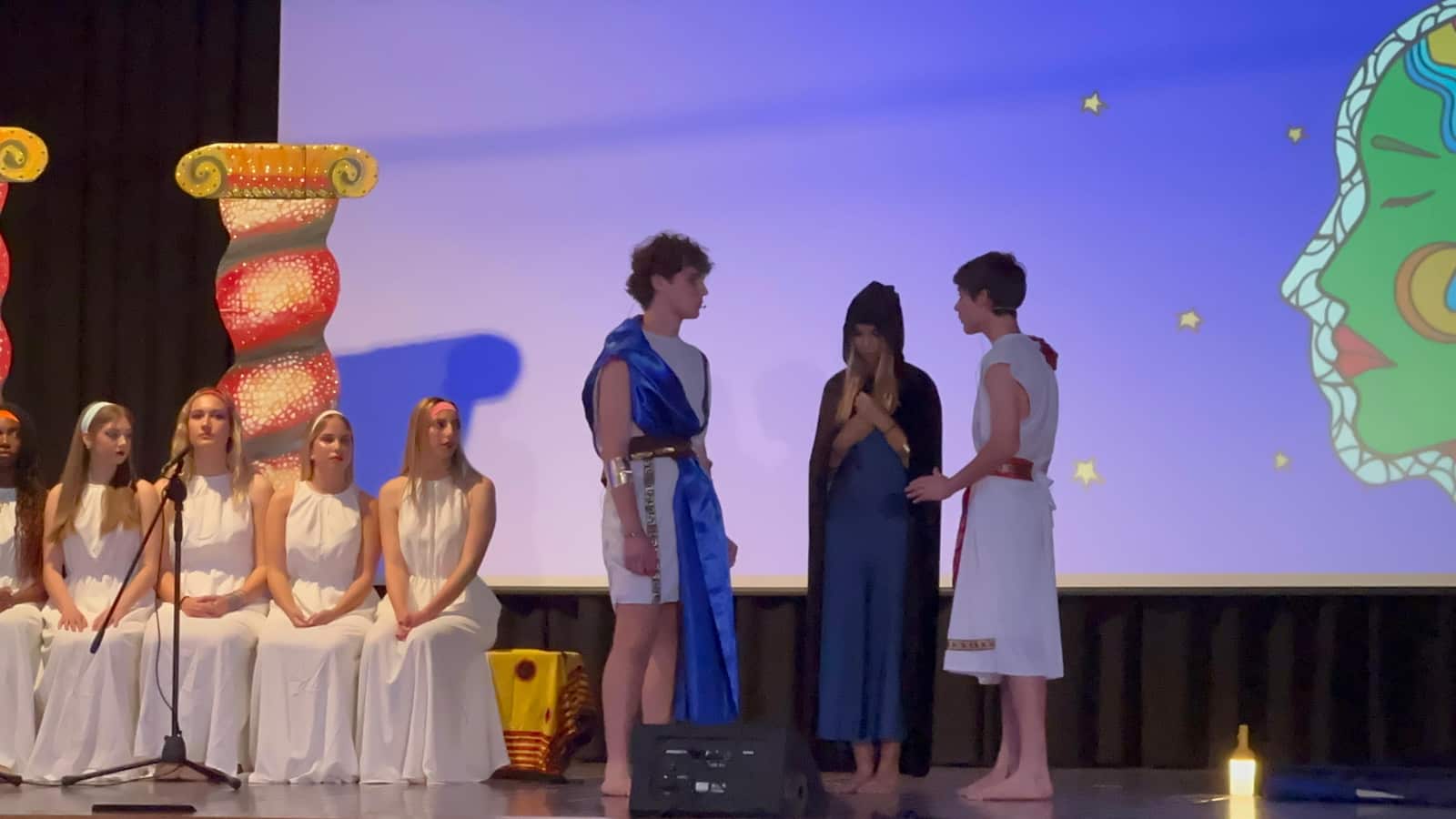
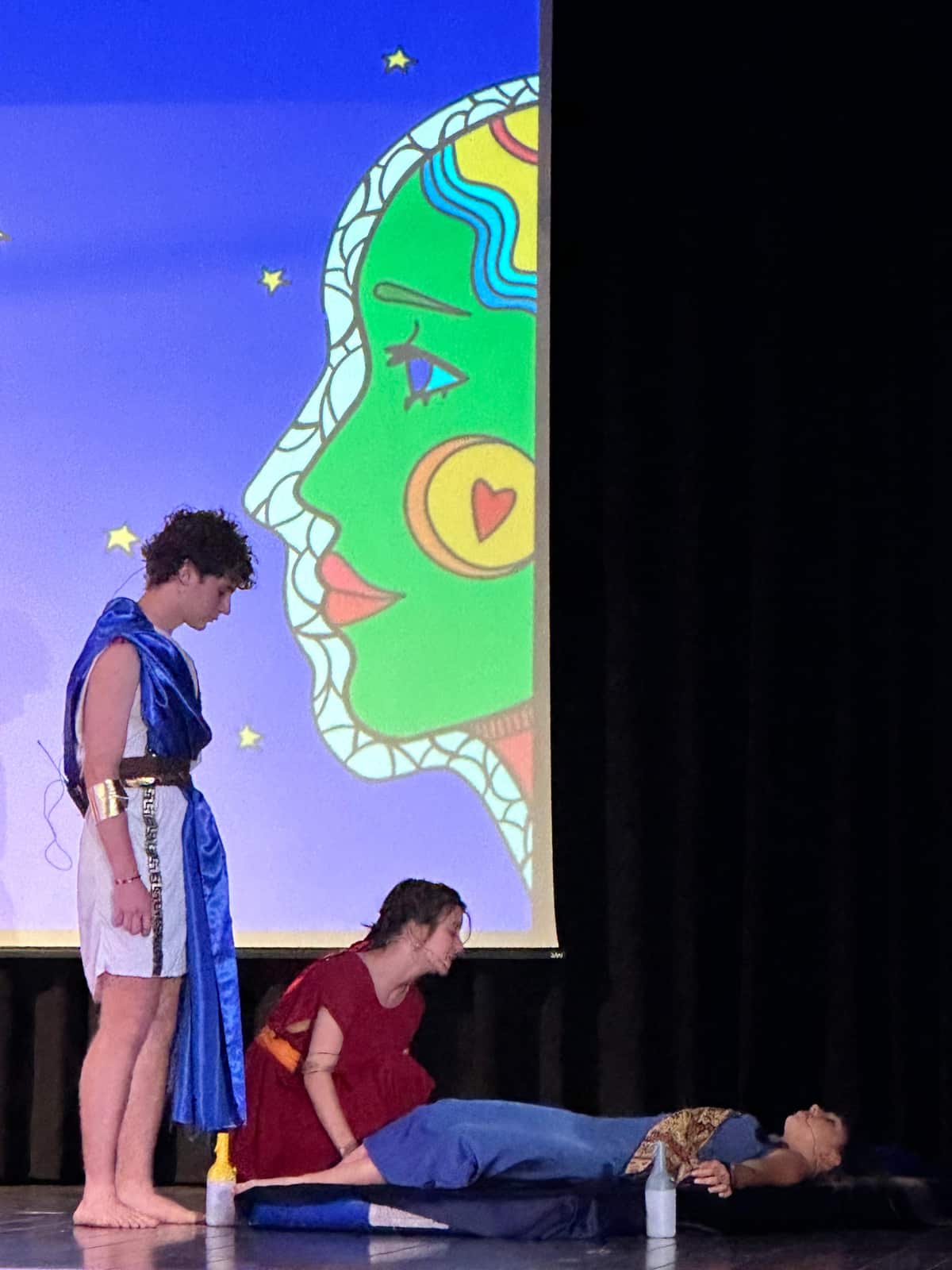
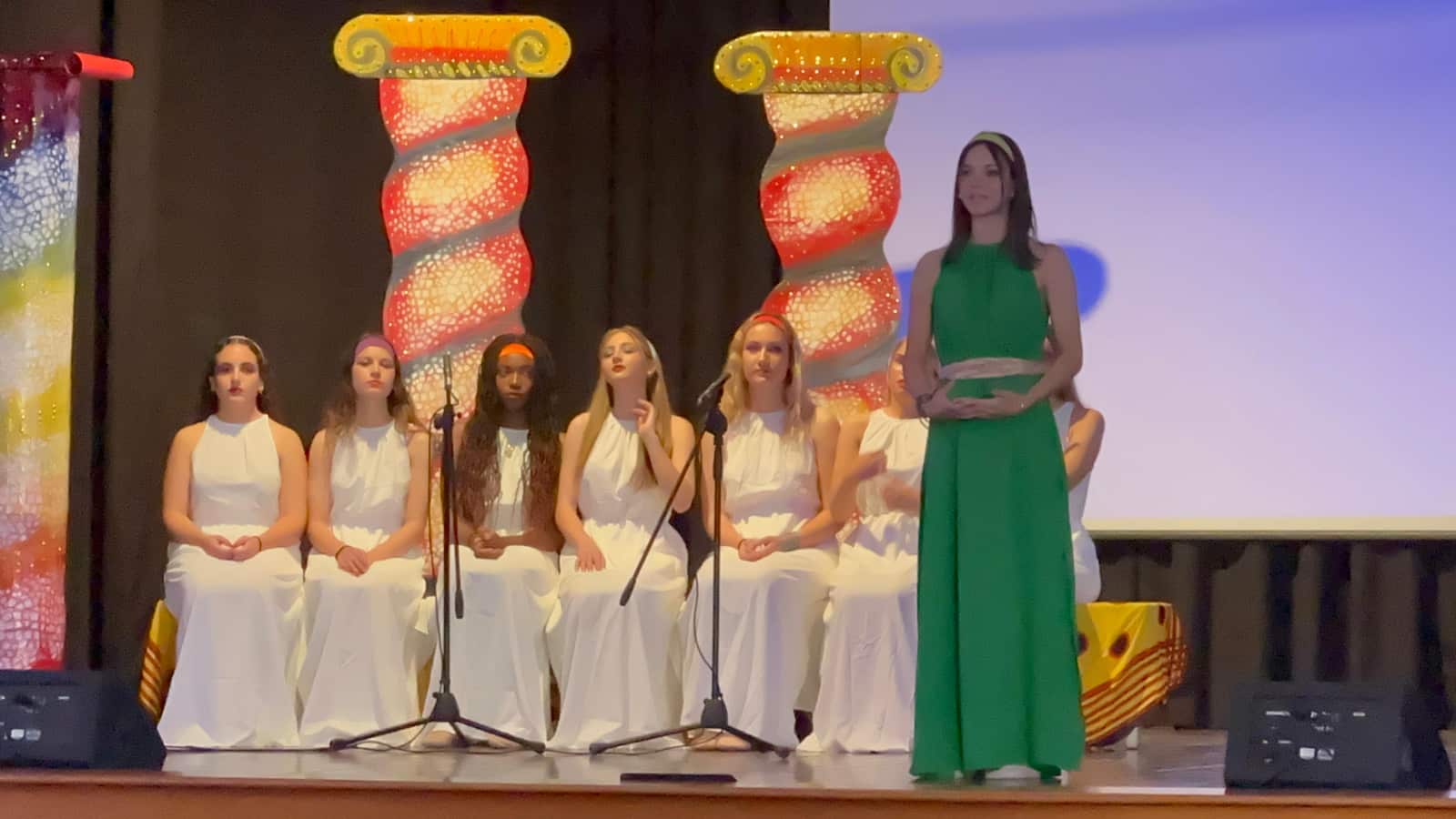
For the end of the school year, the newly formed theater company of High School students gave us an intense performance of Euripides’ Alcestis, with sets and costumes inspired by the artist Niki de Saint Phalle. We are publishing the director’s notes by Prof. Federica Turco, head of the PCTO Theater program.
The idea of staging Euripides’ Alcestis came to me one late-summer afternoon while I was preparing the course plan for Greek Language and Literature for the fourth-year Classical class.
Alcestis belongs to the “early Euripides”: it is a tragicomedy because, unlike all the other tragedies, it has a happy ending, and I was intrigued by the idea of trying my hand, for my first work as a “director,” at a classical drama that would not be too heavy for an audience not used to watching or reading tragedies. The protagonist is a young woman who out of love sacrifices her own life to save her husband Admetus and the kingdom he rules: Alcestis is brave, she is not afraid of death, and with dignity and composure, until she breathes her last, she bids farewell to her husband and children, asking only that Admetus respect her even in death and be faithful to her for eternity.
Reading the text, I realized how powerful Euripides’ message is for the new generations, in light of the continuing femicides and the continuing struggles for the same rights for men and women that, unfortunately, are still not recognized in much of the Eastern world. Alcestis is the mistress of her own life; no one induces her to make this drastic choice, and she is not brutally killed by a man out of jealousy or because she is considered inferior. On the contrary, in this very tragedy Admetus is a weakling, a spectator of Alcestis’s moral greatness.
In writing the script I tried to stay as faithful as possible to Euripides’ original text, while “modernizing” some parts of the chorus and cutting some scenes that are difficult to perform for a theater company that is newly formed and not yet fully tested.
Once the script was finished, I happened to visit, with my family, the Tarot Garden near Capalbio by the American artist Niki de Saint Phalle; I must admit that I did not know much about Niki de Saint Phalle’s art and life, and with my eyes full of beauty, on returning to Rome I did some research on this artist.
Niki de Saint Phalle, too, like Alcestis, was a strong and courageous woman with a difficult childhood and adolescence, who found in painting first and then in sculpture a “therapy” for pain, something very similar to the cathartic function of theater in Greece in the age of Pericles. Here was the inspiration: why not create an artistic “dialogue” between the classical and the modern? Why not stage a classical drama with a modern set design? This is where the idea for the set design and the poster was born, thanks to the precious help of Professors Monica Bruni and Isabella Raffa, who supported the students in creating the costumes, the poster, and the set design inspired by Niki de Saint Phalle, with colors, recycled materials, and mirrors, just like Niki’s art.
After eight months of exhausting rehearsals and last-minute changes of plan, on May 28 we staged Alcestis, our modern heroine. All the students involved, on stage and behind the scenes, loved this tragedy: at first it was difficult to coordinate a group of 25 people of different ages and with different commitments, but the satisfaction of seeing their happiness as they received the final applause was immense, and hearing the sound of the hands of the little ones from the Middle School together with the older students of the High School rewarded all of us for the great work done, with the hope that it is the beginning of a bright theatrical path and, who knows, of a new theater company, the Marymount High School company.
Prof. Federica Turco