· Early Childhood, Primary School
New Multidisciplinary Green Areas: All the “Senses” of Teaching!
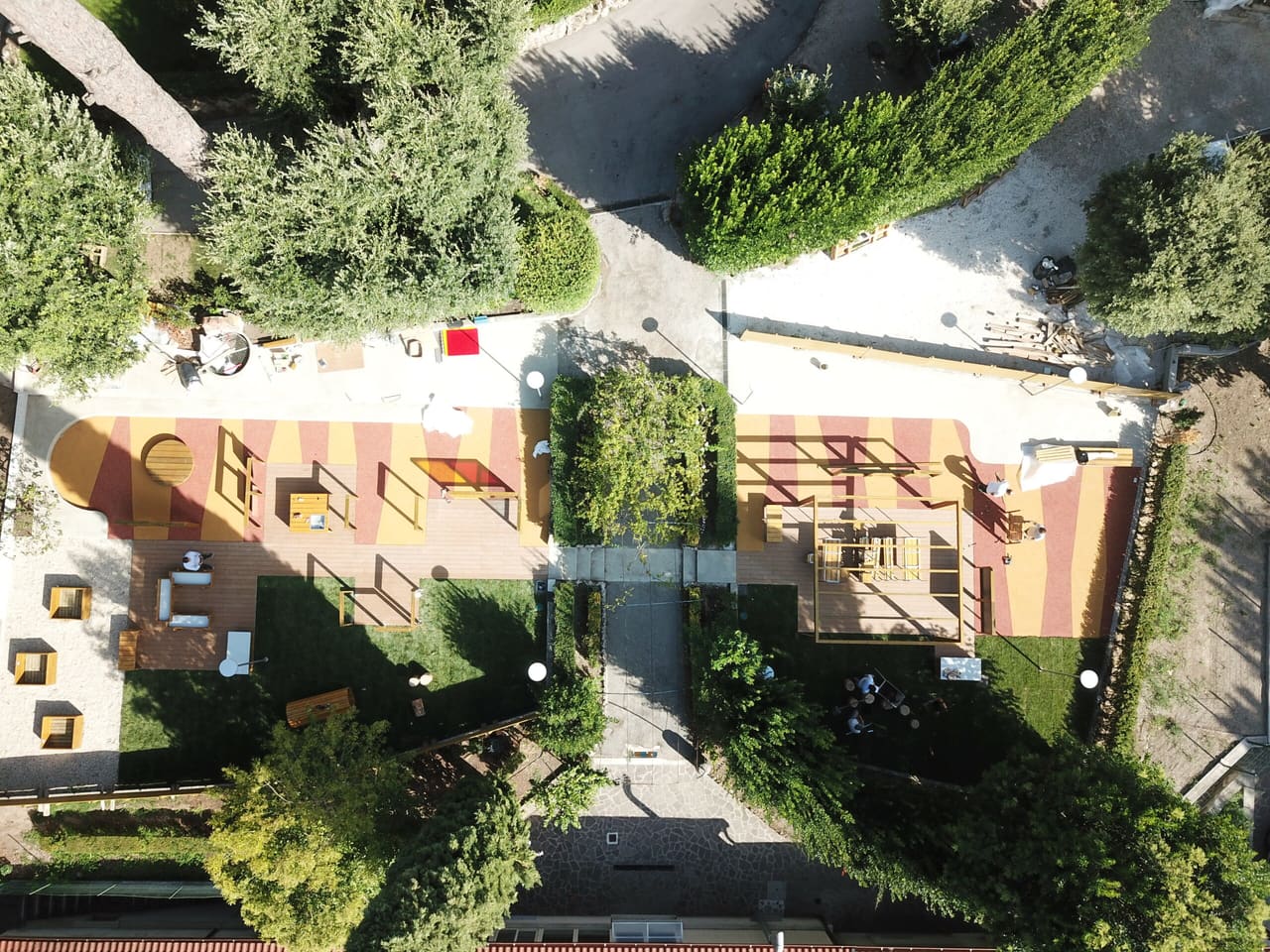
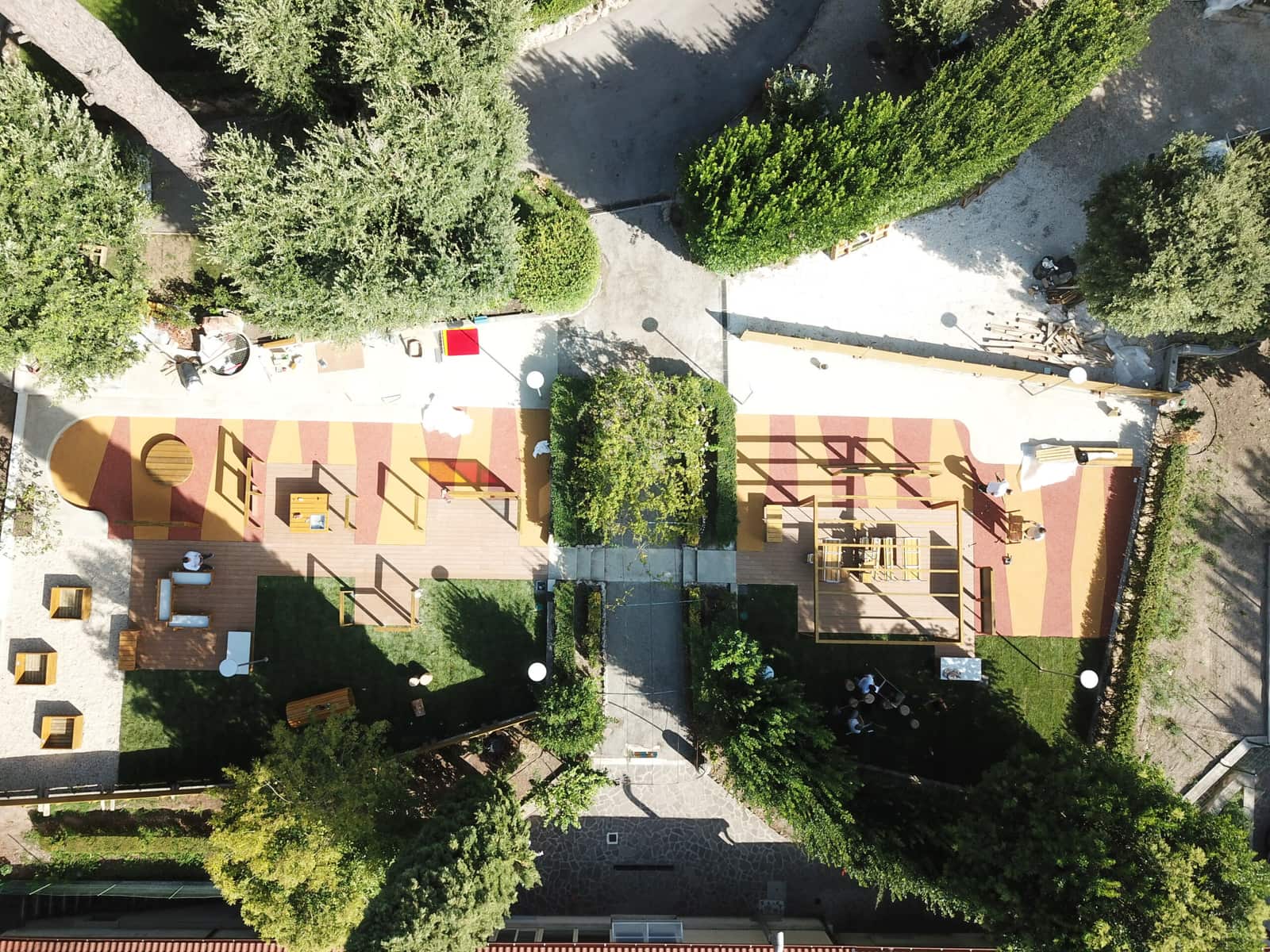
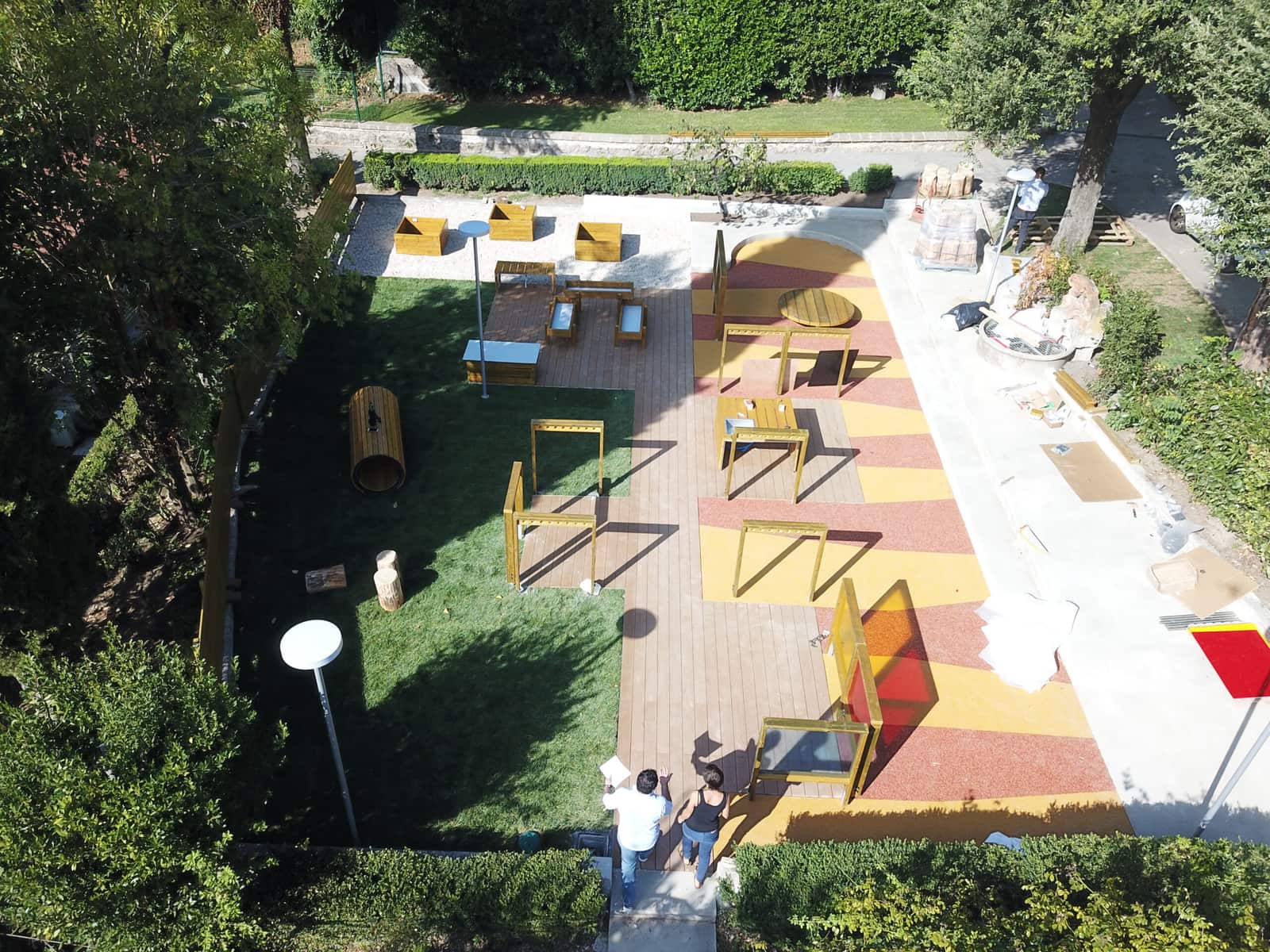
Starting this year, Marymount can count on an important new teaching area, recently inaugurated in the garden of our school, which is a sensory laboratory space. Below we report the focus of the project in the article by teacher Lidia Tavani, who followed it closely.
———
Inspired by the enthusiasm of the famous Italian pedagogist Loris Malaguzzi, the A.LA.S. are outdoor learning spaces for children in the Early Childhood School and in the first cycle of Primary School (Grades 1, 2, and 3).
The idea of creating an outdoor learning space stems from the desire to make learning paths complete, establishing educational continuity with the teaching offered inside the classrooms. Too often, in fact, the outdoor spaces of schools are seen as places for mostly recreational or sports activities. However, they are a great educational resource, able to respond effectively to the new educational challenges that call for rethinking learning in light of the concepts of “skills” and “competencies.”
The A.LA.S. project responds to these challenges by shaping the educational offering along hands-on, workshop lines and by proposing sensory experience as a privileged channel for building individual and creative learning paths.
“Laboratory,” in educational terms, means above all the possibility of observation and discovery: to think, imagine, plan, and act. And this is the meaning of Malaguzzi’s “hundred” that we want to offer to Marymount students, that is, the possibility of discovery and action that comes through the exercise of reflective thinking and of one’s own abilities.
To this end, the A.LA.S. are made up of furnishings specially designed to encourage unstructured and individualized interactions. The goal is the free and creative expression of every boy and every girl. In these spaces everyone can find their own dimension, because here children directly experience the multidimensionality of one and the same learning objective. This explains the choice of simple, essential furnishings featuring basic frame structures, designed to be gradually built up with the children’s ideas. These are constructions with a flexible and versatile framework that makes it possible to hang movable artifacts or to securely attach teaching panels designed by the children or the teachers. At the time of the inauguration many of these frames are completely bare and empty, leaving even the children who visit them for the first time astonished: “But are we really going to build them ourselves? With real things?!”
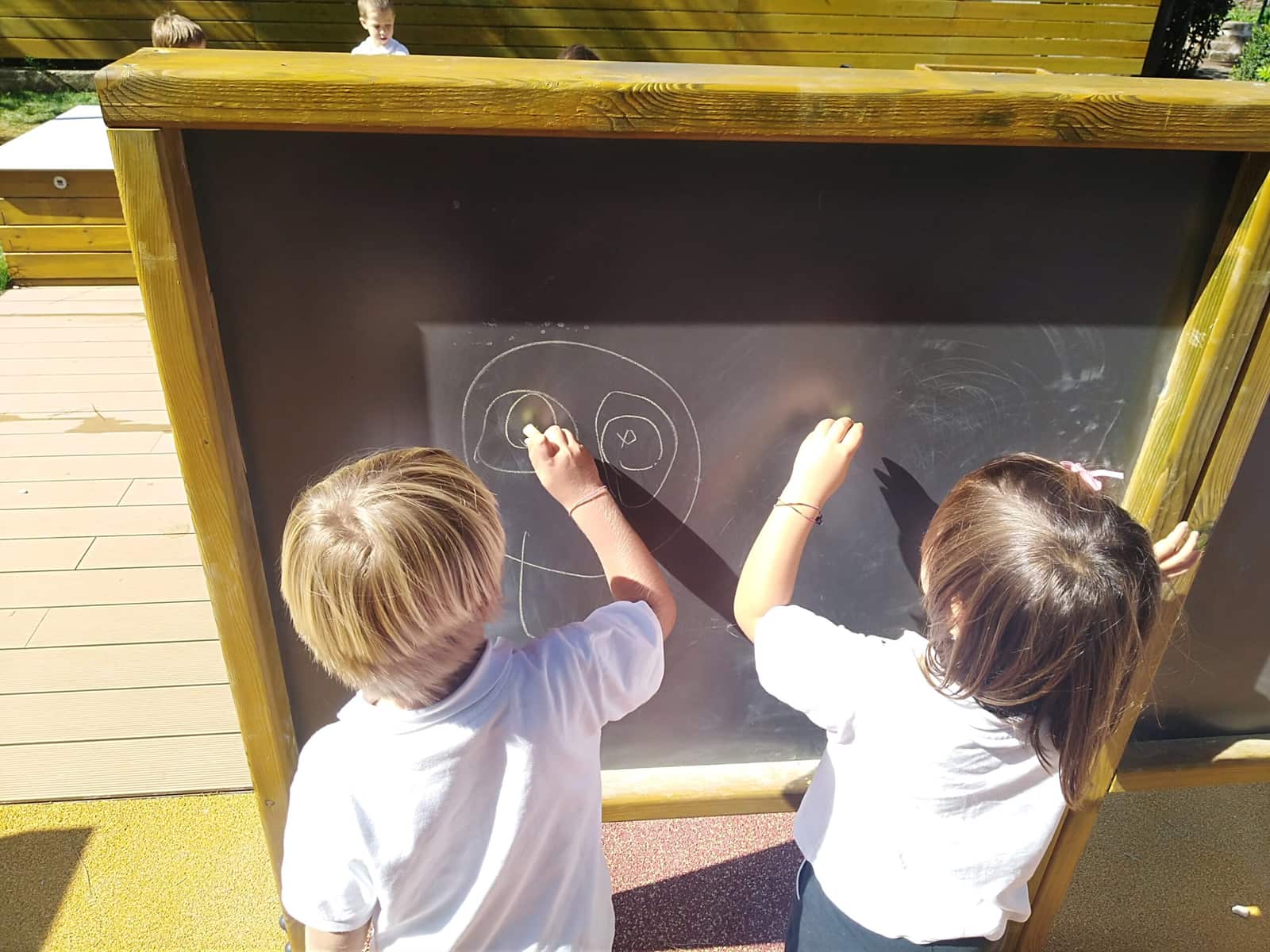
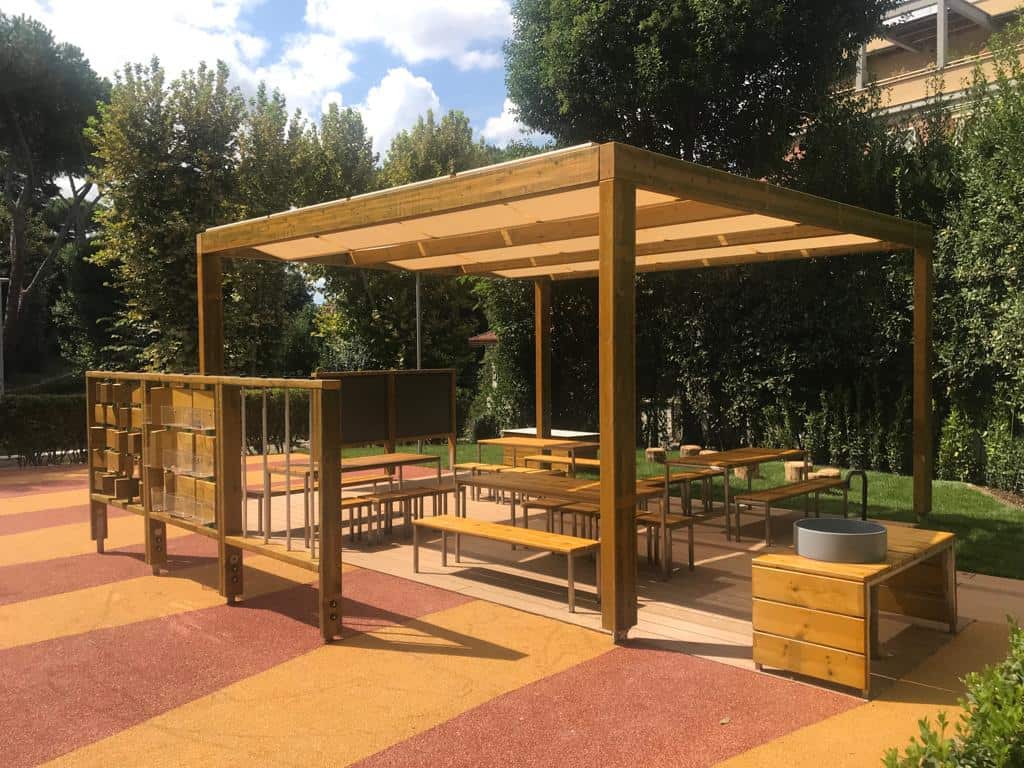
A portion of the frames, on the other hand, are already complete and structured, because they serve to give an identity to the portion of space they occupy. To give a space an identity means to understand space as an agent of interaction which, as such, conveys social relationships, ways of acting, processes of meaning-making, and norms of behavior. In the case of the A.LA.S., the space is divided into several identity areas: the “light area,” where it is possible to discover the effects of sunlight among shadows, colors, and reflections; the “sound area,” where children can discover sounds, tones, and noises depending on the material used and its shape; the “tactile and manipulation area,” featuring interconnected basins for playing with water, soil, sand, and other materials; the “scent area,” that is, a small garden of aromatic plants; the “composition area,” identified by a small table where children can build small artifacts and by frames with panels dedicated to practicing space-management activities and fine motor skills; the “story area,” identified by a small amphitheater furnished with chalkboards; the “rest area,” with a grassy zone used for informal activities; and finally the “outdoor classroom area,” equipped with small tables, seating, chalkboards, and frames to train attentional executive functions and working memory.
The A.LA.S. are therefore a work in progress space, one that wants to be built with the children and the teachers because it strongly believes in the potential of every person toward knowledge that is discovered and built in an active and participatory way.
To participate actively, however, one needs direct experience. One must get fully and deeply involved, giving one’s all.
From this point of view, the sensory channel becomes valuable for living so-called all-encompassing experiences, in which children immerse themselves completely in a learning situation, coming into deep contact with themselves. A multisensory teaching approach makes it possible, in fact, to bring into play many abilities, different from time to time depending on individual interests and needs of the moment. In this way everyone reaches the required objectives, and learning is charged with a positive emotionality that opens thought to the “possible.” The latter is the thinking that looks for ways to reach its goal, the thinking that finds creative solutions, the proactive and prosocial thinking that understands everyday life through the lens of what each person can do, for themselves and for others, putting their talents into action and at others’ disposal.
It is the thinking that is already action and says: the hundred is there, here it is!
Il cento c’è (The hundred is there)
The child
is made of one hundred.
The child has
a hundred languages
a hundred hands
a hundred thoughts
a hundred ways of thinking
of playing and of speaking
A hundred, always a hundred
ways of listening
of marveling, of loving
a hundred joys
for singing and understanding
a hundred worlds
to discover
a hundred worlds
to invent
a hundred worlds
to dream.
The child has
a hundred languages
(and then a hundred, a hundred, a hundred)
but they steal ninety-nine.
They tell him:
to think without hands
to do without a head
to listen and not to speak
to understand without joys
to love and to marvel
only at Easter and Christmas.
They tell him:
to discover the world that is already there
and out of a hundred
they steal ninety-nine.
They tell him:
that play and work
reality and fantasy
science and imagination
sky and earth
reason and dream
are things
that do not go together.
In short, they tell him
that the hundred is not there.
The child says:
on the contrary, the hundred is there.
[Loris Malaguzzi]
DCIM100MEDIADJI_0324.JPG
DCIM100MEDIADJI_0327.JPG